
Table of Contents
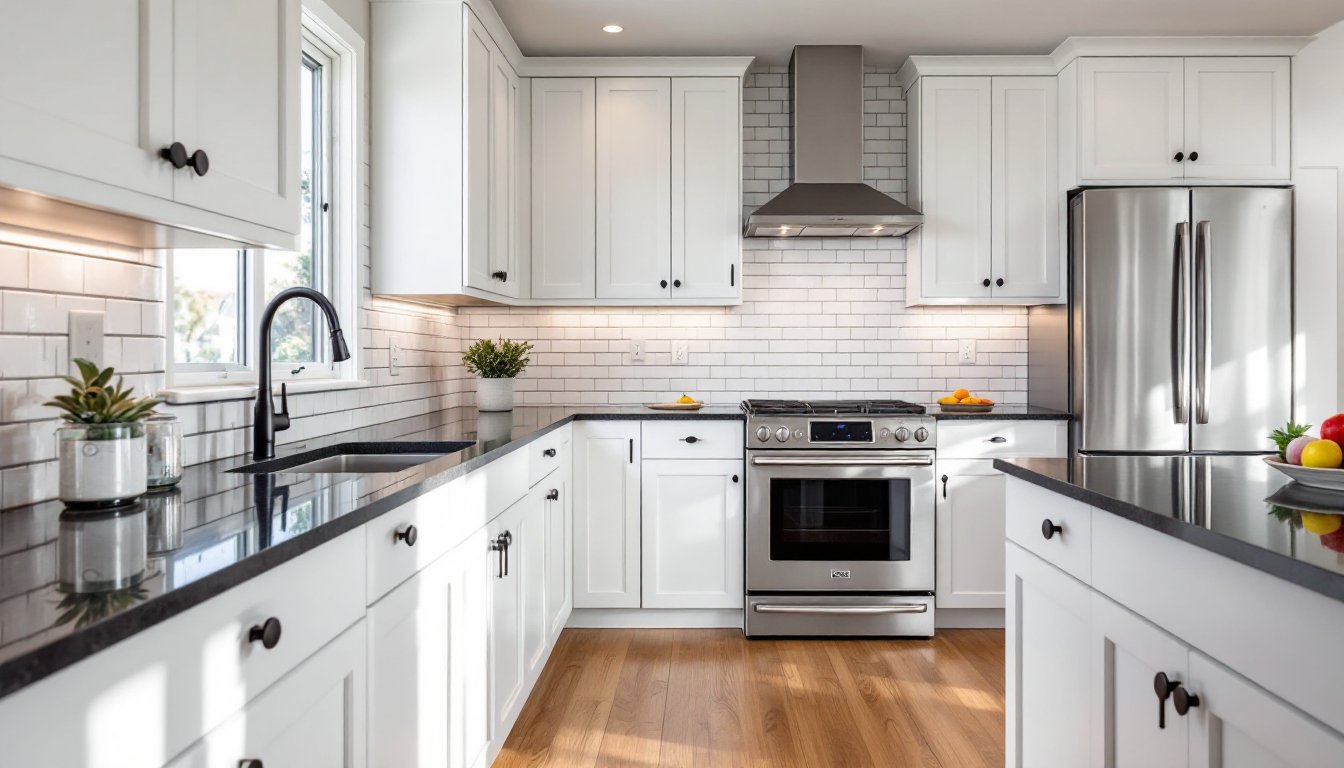
ToggleA kitchen with white cabinets and black countertops delivers one of the most enduring color schemes in residential design. This pairing works across nearly every style, from farmhouse to contemporary, and anchors a space without locking homeowners into fleeting trends. The contrast creates visual depth, makes rooms feel larger, and provides a neutral backdrop for hardware, backsplash, and appliances. Whether renovating on a budget or planning a full gut job, understanding material choices, finish options, and balance techniques will ensure this classic look performs as well as it photographs.
Key Takeaways
- White kitchen cabinets with black countertops create powerful visual contrast that makes spaces feel larger, works across multiple design styles, and provides a versatile backdrop for hardware and finishes.
- Choose your black countertop material carefully—granite requires annual sealing, quartz is non-porous and low-maintenance, and soapstone offers heat resistance with a natural patina that develops over time.
- White cabinet finishes matter significantly: satin sheens resist moisture but show imperfections, while matte finishes feel modern but require weekly degreasing to prevent grease buildup.
- Balance the high contrast between white and black by introducing a third tone like warm wood, varying surface finishes, and using strategic lighting to prevent the space from feeling stark or cold.
- Maintain white cabinets with mild soap and water while avoiding ammonia-based cleaners, and care for black countertops by using pH-neutral stone cleaners and resealing granite when water no longer beads on the surface.
- Hardware finishes and strategic negative space in your layout can either enhance or undermine the impact of white kitchen cabinets with black countertops—choose one dominant metal finish and avoid over-packing cabinetry on every wall.
Why White Cabinets and Black Countertops Create the Perfect Contrast
White kitchen cabinets with dark countertops work because they exploit value contrast, the strongest visual relationship in design. Black surfaces pull the eye down to the work plane, anchoring appliances and prep areas. White cabinetry reflects light upward and outward, making walls recede and ceilings feel higher. This combination also forgives errors. Minor scuffs on white paint blend better than on darker finishes, and fingerprints disappear against black granite or quartz.
From a practical standpoint, white kitchen cabinets black countertop layouts simplify decision-making downstream. Flooring can go light or dark. Backsplash tile has room to introduce pattern or metallics. Even stainless appliances, which can clash with all-white or all-dark schemes, settle comfortably between the two extremes.
The pairing also spans aesthetics. A farmhouse kitchen white cabinets black countertops setup might lean on shaker doors and honed soapstone, while a modern interpretation uses slab-front cabinets and polished quartz. That versatility means the scheme ages well, refresh hardware and lighting in five years, and the bones still read current.
Best Countertop Materials for a Black Finish
Not all black countertops deliver the same performance, and choosing the wrong material for a household’s use pattern leads to buyer’s remorse.
Granite and Quartz Options
Granite remains a workhorse for white kitchen cabinets with black granite layouts. Absolute Black, a fine-grained variety sourced from India, offers minimal veining and a consistent color field. It’s available in both polished and leathered finishes: polished reflects more light and shows water spots, while leathered hides fingerprints but requires more frequent sealing. Expect to seal granite annually with a penetrating sealer, spray on, let sit 15 minutes, wipe dry.
Galaxy Black and Black Pearl introduce subtle flecks of gold, silver, or brown, which can either tie into warm metal hardware or clash if the rest of the palette skews cool. Always view full slabs under your kitchen’s lighting before templating. Granite slabs run 9–12 feet long and roughly 3 cm thick (about 1.18 inches): countertop fabricators will template, cut sink and cooktop openings, and polish edges on-site or in-shop.
Quartz engineered slabs, brands like Caesarstone, Silestone, or Cambria, bind crushed stone with polymer resins. They’re non-porous, so sealing isn’t required, and color stays uniform slab-to-slab. For a true black, look at Caesarstone 4120 Raven or Silestone Negro Tebas. Polished finishes dominate the market, but matte and suede textures are gaining traction and hide smudges better. Quartz can scorch under a hot pan placed directly from the oven, so trivets remain mandatory.
Soapstone and Engineered Alternatives
Soapstone delivers a softer, almost charcoal-gray black that deepens with mineral oil applications. It’s heat-resistant, non-porous, and nearly indestructible, but scratches easily, most owners embrace the patina. For white kitchen cabinets with dark countertops in a farmhouse or transitional setting, honed soapstone adds texture without competing for attention. Expect to oil the surface every few weeks initially: frequency drops as the stone darkens. Soapstone weighs 175–185 lbs per cubic foot, so confirm cabinet boxes are built with ¾-inch plywood or solid hardwood frames, not particleboard.
Dekton and Neolith ultra-compact surfaces use sintered stone technology, extreme heat and pressure fuse minerals into slabs that resist scratches, UV fading, and heat better than quartz. They’re pricier (often 20–30% above premium quartz), but for outdoor kitchens or spaces with direct sun, the performance justifies the cost. These materials machine similarly to granite, so most fabricators can handle them without specialized tooling.
Choosing the Right White Cabinet Style and Finish
Cabinet style and paint finish determine whether a white kitchen cabinets black countertop scheme reads traditional, modern, or somewhere in between.
Shaker doors remain the safest choice, five-piece construction with a recessed center panel works in farmhouse, transitional, and even Scandinavian-inspired kitchens. For a true period look, specify inset construction where doors sit flush with the face frame: it’s pricier and requires tighter tolerances, but the reveal lines are crisp. Overlay construction (doors covering the frame) costs less and hides seasonal wood movement better.
Slab-front cabinets, flat panels with no frame or profile, suit contemporary and mid-century layouts. They show every surface imperfection, so insist on MDF substrate with a factory-catalyzed finish rather than job-site painting. MDF machines cleaner than plywood and won’t telegraph grain lines through paint.
Paint finish matters more than most homeowners expect. Satin or semi-gloss sheens (25–40% gloss) clean easily and resist moisture around sinks, but they highlight dents and dings. Matte finishes hide imperfections and feel more modern, but kitchen grease clings to them: plan to wipe down doors weekly with a degreasing cleaner. If ordering factory-finished cabinets, ask whether the finish is conversion varnish or catalyzed lacquer, both cure harder than standard oil-based paints and stand up to repeated scrubbing.
Hardware choice can shift the entire mood. Matte black pulls and knobs create a monochromatic thread between cabinets and counters. Polished nickel or brass introduces warmth. For a farmhouse kitchen white cabinets black countertops aesthetic, cup pulls and bin handles in oil-rubbed bronze tie into apron sinks and industrial lighting. Whatever the finish, mounting pulls with a screw length that penetrates at least 1 inch into the door or drawer front prevents loosening over time.
Design Tips to Balance White and Black in Your Kitchen
High contrast demands careful distribution of color and texture to avoid a stark, cold feeling.
Introduce a third tone. Warm wood floors, open shelving in walnut or oak, or a butcher-block island top soften the boundary between white and black. Even a natural fiber rug in front of the sink adds visual relief. Many designers incorporating kitchen remodel inspiration use wood tones as a bridge element.
Vary surface finishes. Pair glossy subway tile backsplash with matte cabinet paint and honed countertops. Mixing sheen levels prevents the space from reading flat under overhead lighting. If using black quartz with high polish, consider textured white cabinetry, beadboard doors or raised-panel styles, to add dimension.
Balance upper and lower cabinets. All-white uppers with black lowers (and black counters) can make a kitchen feel bottom-heavy. Break it up with floating shelves, glass-front cabinets, or a contrasting backsplash that draws the eye vertically. In galley or U-shaped kitchens, consider white cabinets on both levels and reserve black for the island and perimeter counters only.
Control lighting. Under-cabinet LED strips (2700–3000K color temperature) eliminate shadows on black work surfaces and make food prep safer. Pendant lights over an island should hang 30–36 inches above the counter: any lower and they’ll obstruct sightlines, any higher and they lose task-lighting function. Recessed cans on a dimmer let homeowners shift the mood from bright task mode to ambient evening lighting.
Layer in metallics carefully. Stainless appliances, chrome faucets, and nickel hardware can create too many competing finishes. Pick one dominant metal and limit others to small accents. For example, if the range and fridge are stainless, choose cabinet hardware in the same cool-toned family rather than mixing in warm brass. This approach aligns with modern interior design trends that favor cohesion over eclectic mixing.
Use open space. Don’t pack every wall with cabinetry. A blank section of painted drywall between the range and a window, or an open corner with a small desk nook, gives the eye a place to rest. High-contrast schemes feel less aggressive when punctuated by negative space.
Maintenance and Care for White Cabinets and Black Countertops
Both ends of the color spectrum show different types of wear, so maintenance routines need to address each.
White cabinets accumulate grime along top edges, near handles, and around the cooktop. Use a microfiber cloth dampened with warm water and a drop of dish soap for weekly wipe-downs. Avoid all-purpose cleaners with ammonia or bleach on factory finishes, they can yellow catalyzed lacquer over time. For grease buildup, a 1:1 mix of white vinegar and water works without damaging the finish. Repaint touch-ups every few years keep the space looking fresh: store leftover paint in a tightly sealed can with the lid tapped down using a rubber mallet, and note the sheen and brand on the lid in permanent marker.
Black countertops show dust, water spots, and dried soap like nothing else. Quartz and granite wipe clean with a damp cloth, but polished finishes benefit from a dedicated stone cleaner (pH-neutral, no acids) once a week to maintain luster. For soapstone, reapply mineral oil when the surface starts looking chalky, usually every 4–6 weeks in the first year, then every few months. Keep a small squeeze bottle of oil and a clean rag under the sink.
Sealing granite correctly prevents staining. Test whether your slab needs resealing by dripping a few drops of water on the surface: if it beads up, the sealer is intact. If it soaks in and darkens the stone within a few minutes, reseal. Use a penetrating sealer (not a topical coating) designed for natural stone. Wipe on with a lint-free cloth, let it absorb for 10–15 minutes, then buff dry. Ventilate the room and wear nitrile gloves, most sealers are solvent-based.
Grout lines in tile backsplashes trap grease and discolor over time, especially white or light gray grout against black counters. Seal grout with a silicone-based sealer after installation and annually thereafter. For stubborn stains, a paste of baking soda and water scrubbed with an old toothbrush lifts most grime without harsh chemicals. This kind of detailed maintenance advice often appears in kitchen organization tips that address long-term upkeep.
Hardware in any finish needs periodic tightening. Drawer pulls see hundreds of cycles per month: check screws every six months with a screwdriver and snug them up a quarter-turn if loose. Oil-rubbed bronze and matte black finishes can wear through to the base metal with heavy use, touch up with matching spray paint or replace if the wear bothers you.
Finally, protect countertops from heat and impact. Even heat-resistant soapstone can crack under thermal shock if an ice-cold item lands on a spot just heated by a pan. Use trivets, cutting boards, and pot holders as standard practice, not just when company’s coming. Most countertop warranties exclude damage from impact and extreme temperature changes, so prevention beats filing a claim.