
Table of Contents
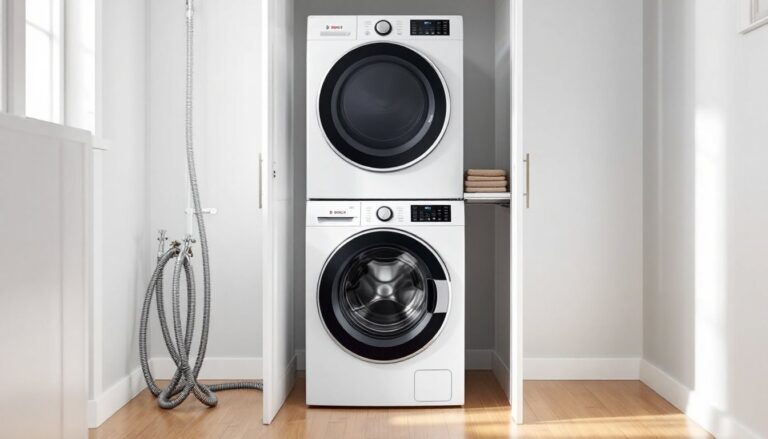
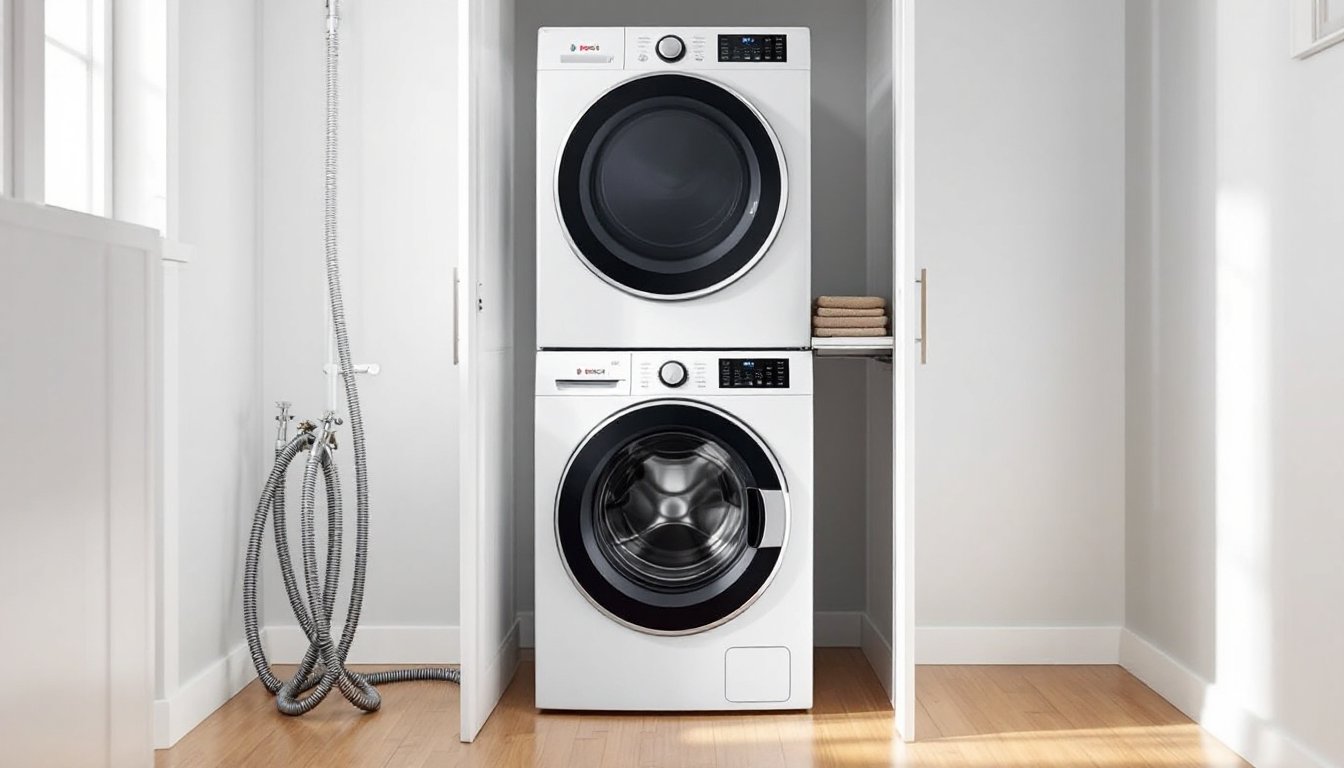
ToggleWhen space is tight but laundry still piles up, a Bosch stackable washer and dryer offers a proven solution without compromising on performance. These compact units fit where full-size pairs won’t, closets, alcoves, apartments, while delivering the cleaning power and efficiency Bosch is known for. Unlike budget stackables that vibrate across the floor or leave clothes damp, Bosch engineers their units with anti-vibration tech and condensation drying that doesn’t need external venting. Whether planning a laundry closet retrofit or outfitting a basement apartment, understanding what sets Bosch apart helps homeowners make a decision that lasts.
Key Takeaways
- A Bosch stackable washer and dryer delivers space savings with a 24-inch footprint while maintaining performance through anti-vibration technology and ventless heat-pump drying.
- Heat-pump dryers reduce energy consumption by 28-50% compared to traditional models, with ENERGY STAR certified units using significantly less electricity over the appliance’s lifetime.
- Bosch’s EcoSilence motor and advanced engineering keep noise levels below 52 decibels during wash cycles, making these units ideal for open-plan homes and multifamily buildings.
- The 800 Series offers Wi-Fi connectivity and i-DOS automatic detergent dispensing that can save up to 30% on detergent costs annually and eliminate guesswork.
- Installation requires professional help for electrical (240V for dryer) and plumbing codes, plus a model-specific stacking kit ($100-$150) to safely secure the dryer to the washer.
Why Choose a Bosch Stackable Washer and Dryer?
Bosch’s reputation in compact laundry comes from decades of European market experience, where space-efficient appliances are the norm rather than the exception. The brand’s stackable units deliver three key advantages: genuine space savings, quiet operation, and ventless drying.
A typical Bosch stackable footprint measures 24 inches wide by 33 inches deep, roughly half the width of a standard side-by-side pair. That dimension lets them slip into closets with bifold doors, under counters, or in bathroom alcoves where a conventional setup won’t fit. The vertical stack typically requires about 75 to 80 inches of ceiling height, accounting for the stacking kit and a few inches of clearance.
Bosch’s EcoSilence Drive motor keeps noise down to around 47-52 decibels during wash cycles, quieter than most dishwashers. That matters in open-plan condos or homes where the laundry area shares a wall with bedrooms. The AntiVibration Design uses reinforced side panels and dampening tech to prevent the notorious “walk” that plagues cheaper stackables on spin cycles.
Ventless condensation drying eliminates the need to cut exterior vents through walls or roofs, a major advantage in multifamily buildings, historic homes with masonry exteriors, or any install where running ductwork is impractical or prohibited by lease terms. The dryer condenses moisture into a drain line or collection tank, making installation purely electrical and plumbing hookups.
Top Bosch Stackable Washer and Dryer Models to Consider
Bosch’s 2026 lineup includes both 24-inch compact and front-load models designed for stacking. The most common configurations pair a front-load washer with a ventless heat-pump dryer.
Bosch 500 Series Compact Pair (WAW285H2UC / WTG865H4UC)
This mid-tier combo offers 2.2 cubic feet of wash capacity and 4.0 cubic feet of dry capacity. The washer uses SpeedPerfect technology to cut wash time by up to 40% without sacrificing clean, useful for households running multiple loads daily. The heat-pump dryer recycles heat to reduce energy consumption by roughly 50% compared to traditional condensation dryers. Cycle times run longer, expect two to three hours for a full dry cycle, but energy bills reflect the savings.
Bosch 800 Series Compact (WAW285H1UC / WTW87NH1UC)
The 800 Series steps up with Home Connect Wi-Fi integration, letting users start, stop, or monitor cycles remotely via smartphone. The washer includes an i-DOS automatic detergent dispenser that meters out precise amounts based on load size and soil level, reducing waste and guesswork. The dryer adds a SelfCleaning Condenser that flushes lint automatically, maintaining efficiency without manual filter cleaning beyond the main lint screen. Capacity matches the 500 Series at 2.2 cubic feet wash and 4.0 cubic feet dry.
Bosch Ascenta Compact (WAT28400UC / WTG86400UC)
Bosch’s entry-level compact pair strips away smart features and i-DOS but retains the EcoSilence motor and AntiVibration design. Wash capacity drops slightly to 2.0 cubic feet, and the dryer uses conventional condensation rather than heat-pump tech, so energy use is higher. It’s a solid pick for rental properties or budget-conscious homeowners who prioritize reliability over bells and whistles.
Many best stackable washer and dryer roundups include Bosch models for their blend of capacity and footprint efficiency.
Key Features That Set Bosch Apart
Bosch differentiates itself through engineering details that address common stackable pain points.
Heat-Pump Drying Technology: Unlike vented dryers that exhaust hot, moist air outdoors, Bosch’s heat-pump models recycle warm air in a closed loop. A refrigerant circuit extracts moisture, which condenses into a drain or tank. This approach cuts energy use significantly, ENERGY STAR certified models use about 28% less electricity than conventional condensation dryers. The trade-off is longer cycle times, typically two to three hours, but fabrics experience less heat stress and last longer.
i-DOS Automatic Dosing: Available on 800 Series and above, this system stores up to 42 loads’ worth of detergent and fabric softener in onboard reservoirs. Sensors measure load size, fabric type, and soil level, then dispense the exact amount needed. Over-dosing wastes detergent and leaves residue: under-dosing leaves stains. i-DOS eliminates both, and Bosch claims users save up to 30% on detergent costs annually.
SelfCleaning Condenser: Ventless dryers accumulate lint in the condenser coil, which chokes airflow and extends dry times. Bosch’s SelfCleaning feature flushes the condenser with water at the end of each cycle, maintaining peak performance. Owners still clean the main lint filter after every load, but deep condenser maintenance drops to once or twice a year instead of monthly.
SpeedPerfect and EcoPerfect Modes: SpeedPerfect shortens wash time by increasing drum rotation and water temperature, cutting a normal cycle from 90 minutes to about 60. EcoPerfect extends cycle time slightly but reduces water heating and electricity draw by roughly 20%. Choosing the right mode depends on whether time or energy savings matter more for a given load.
Home Connect Smart Features: Wi-Fi-enabled models let users download specialty cycles (activewear, delicates, allergen removal), receive push notifications when cycles finish, and troubleshoot errors via the app. The app also tracks detergent levels for i-DOS tanks and suggests reorder timing.
Installation Requirements and Space Planning
Installing a Bosch stackable washer dryer isn’t a weekend DIY unless you’re comfortable with plumbing, electrical work, and leveling appliances. Most building codes require a licensed plumber for water supply and drain hookups, and an electrician for any new 240V circuits.
Physical Dimensions and Clearances
Bosch 24-inch compacts measure roughly 24″ W × 33″ D × 34″ H for the washer, with the dryer adding another 34 inches when stacked. Factor in the stacking kit height (about 1 inch) and 6 inches of rear clearance for hoses and ventilation. Total installed height lands near 75-80 inches, so standard 8-foot ceilings work, but measure carefully if you’re tucking the stack under a sloped attic ceiling or mezzanine.
Allow at least 1 inch of side clearance on each side to reduce vibration transfer to walls, and leave front clearance equal to the door swing radius plus a few inches for loading. Bosch’s reversible door hinges let you flip the swing direction to suit tight alcoves.
Electrical and Plumbing
The washer typically requires a 120V, 15-amp dedicated circuit. The dryer needs 240V, 30-amp service, this is non-negotiable for heat-pump models. If your laundry area currently has only 120V, hire a licensed electrician to run new wire from the panel. Budget $300-$800 for this upgrade depending on distance and local labor rates.
Water supply should be hot and cold ¾-inch hose bibs with shutoff valves. Use stainless steel braided hoses rather than rubber, they resist bursting and last longer. The drain hose connects to a standpipe (minimum 18 inches tall, 1.5-inch diameter) or a laundry sink. Ensure the standpipe has a P-trap to prevent sewer gas backflow.
Ventless dryers produce condensate that must go somewhere. Most installers run a ½-inch drain line to the same standpipe as the washer, or plumb it into a nearby floor drain. Some models offer a condensate collection tank that requires manual emptying every few loads, practical for installs with no nearby drain, but annoying for daily use.
Stacking Kits and Safety
Bosch sells model-specific stacking kits (typically $100-$150) that bolt the dryer securely to the washer. Never stack without a kit, the dryer can shift or topple during vibration, creating a crush hazard and damaging both units. The kit includes a pull-out shelf that bridges the gap, giving a work surface for folding or sorting.
If placing the stack in a closet, ensure bifold or pocket doors allow full front access. Hinged doors that swing into the room often block loading and unloading. Some building codes, particularly those enforced by Bob Vila and other home improvement authorities, require closet laundry installations to include a smoke detector and fire-rated drywall, especially in multifamily buildings, check local IRC amendments before framing.
Performance and Energy Efficiency
Bosch’s compact washers deliver spin speeds up to 1,400 RPM, extracting more water than most competitors and cutting dryer time. The VarioDrum paddle design alternates rotation direction to lift, drop, and tumble fabrics gently, reducing tangling and wear.
Wash cycles range from 15 minutes (Quick Wash for lightly soiled items) to two hours (Sanitize, which heats water to 165°F to kill bacteria and allergens). EcoPerfect modes stretch cycles slightly but use cooler water and less electricity, ideal for overnight or timed starts.
Dryer performance leans on heat-pump efficiency. Because these units recycle heat rather than generate it continuously, energy consumption drops to around 0.5-0.7 kWh per cycle compared to 2-3 kWh for vented dryers. ENERGY STAR certification confirms models meet federal efficiency standards, often qualifying for utility rebates. Check with your local power company, some offer $50-$100 rebates on qualifying heat-pump dryers.
Real-world dry times vary by load size and fabric type. A full load of cottons might take 2.5 hours on Normal Dry, while synthetics finish in 1.5 hours. The dryer’s moisture sensors prevent over-drying, which saves energy and extends garment life. Bosch’s SelfCleaning Condenser maintains these times over years of use, whereas manually cleaned condensers lose efficiency as lint builds up.
Water consumption averages 13-15 gallons per wash cycle for the 500 and 800 Series, well below the federal standard of 22 gallons for compact washers. Load-sensing tech adjusts fill level automatically, so small loads don’t waste water.
Noise levels stay below 52 decibels during wash and 62 decibels during spin, comparable to normal conversation. The dryer runs quieter still, around 40-45 decibels, because there’s no high-velocity exhaust fan. Kitchen design experts often recommend Bosch units for open-plan homes where laundry areas adjoin living spaces.
Pricing and Where to Buy
Expect to pay $1,400-$1,800 for a Bosch Ascenta pair, $2,200-$2,600 for the 500 Series, and $2,800-$3,400 for the 800 Series as of early 2026. Prices fluctuate with promotions, regional demand, and supply chain factors, so watch for holiday sales around Presidents’ Day, Memorial Day, and Black Friday when appliance retailers often discount 15-20%.
Where to Buy: Major appliance retailers like Home Depot, Lowe’s, and Best Buy stock Bosch compacts in-store and online. Specialty appliance dealers sometimes offer better installation packages or floor-model discounts. Online-only retailers (Appliances Connection, AJ Madison) occasionally undercut big-box pricing but may charge more for delivery or lack local service networks.
Delivery and Installation: Budget an additional $150-$300 for delivery, haul-away of old units, and basic installation (connecting hoses and leveling). Professional stacking, electrical upgrades, or custom cabinetry add to the bill. Some retailers bundle free delivery with purchases over a threshold, ask before committing.
Warranty: Bosch includes a one-year full parts and labor warranty. Extended warranties through retailers or third-party providers run $200-$400 for three to five years of coverage. Given Bosch’s reliability and the cost of out-of-warranty motor or control board repairs ($400-$800), an extended plan can make sense for units in heavy-use households.
Rebates and Incentives: ENERGY STAR models often qualify for utility rebates. The Database of State Incentives for Renewables & Efficiency (DSIRE) lists current programs by ZIP code. Some municipalities also offer water-efficiency rebates for high-efficiency washers, check with your water utility.
Conclusion
A Bosch stackable washer and dryer trades some capacity and speed for serious space savings and energy efficiency. The ventless heat-pump dryers suit installs where venting is impossible, and the quiet operation won’t intrude on living areas. Installation requires attention to electrical specs, plumbing codes, and proper stacking, so budget for professional help unless you’ve got trade skills. For tight spaces that still demand performance, Bosch’s engineering delivers.