
Table of Contents
ToggleSetting up a standing desk in your home office isn’t as simple as slapping a laptop on a high surface and calling it a day. Get the ergonomics wrong, and you’ll trade lower back pain for aching shoulders, sore feet, and neck strain that makes you want to crawl back to your old chair. The good news? Proper standing desk ergonomics follow straightforward principles that anyone can carry out with basic adjustments and a tape measure. This guide walks through the exact measurements, positioning, and habits needed to make standing work for your body, not against it.
Key Takeaways
- Standing desk ergonomics require proper desk height (38-46 inches based on individual height) set at elbow level with a 90-degree bend to prevent forearm strain and neck pain.
- Monitor placement is critical—position the center of the screen at or slightly below eye level with a 10-20 degree downward gaze to keep the cervical spine neutral and reduce neck strain.
- Alternate between sitting and standing in a 1:1 or 2:1 ratio (30-45 minutes each), transitioning gradually from an all-sitting routine to avoid fatigue and sore feet.
- Essential accessories like anti-fatigue mats (¾-1 inch thickness), monitor arms, and a footrest significantly improve comfort during standing desk use.
- Maintain proper posture by keeping a slight knee bend, engaging core muscles gently, positioning elbows 18-24 inches from the desk, and distributing weight evenly between both feet.
- Movement throughout the day matters more than staying in a fixed position—vary your work between standing and sitting tasks based on what feels comfortable for the activity.
Why Standing Desk Ergonomics Matter for Your Home Office
Poor ergonomics at a standing desk cause the same issues as poor sitting ergonomics, just in different body parts. Hunching over a screen that’s too low compresses the cervical spine. Bending elbows at awkward angles creates forearm strain and increases risk of repetitive stress injuries. Standing with locked knees reduces circulation and puts excessive pressure on the lower back.
The actual benefits of a standing desk only show up when the setup matches the user’s body dimensions. Studies on standing workstations show reduced discomfort when desk height, monitor position, and keyboard placement follow ergonomic guidelines. Without proper setup, users often experience increased fatigue and musculoskeletal complaints within the first few weeks.
Home office DIYers have an advantage here: they control every variable. There’s no need to wait for facilities management to approve a monitor arm or argue with IT about keyboard trays. Measure, adjust, test, and refine until the setup feels right. The initial time investment pays off in sustained comfort over months of daily use.
Finding Your Perfect Standing Desk Height
Desk height determines everything else in the ergonomic chain. Get this wrong, and no amount of downstream adjustment will fix the resulting strain.
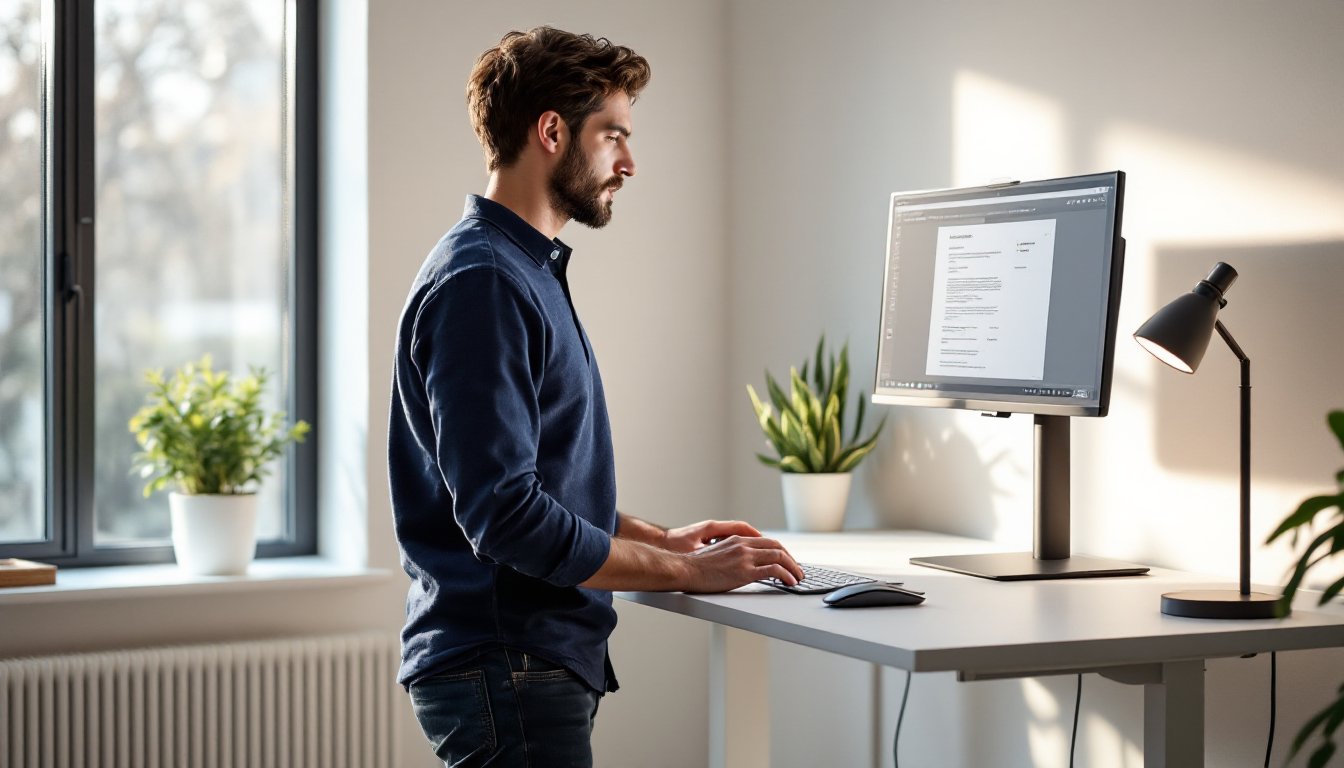
The elbow rule is the gold standard: with shoulders relaxed and arms hanging naturally at the sides, bend the elbows to 90 degrees. The desk surface should sit at or slightly below elbow height, typically 1-2 inches below the bent elbow. This allows the forearms to rest parallel to the floor when typing, with wrists in a neutral position.
For most adults, this translates to a desk height range of 38-46 inches from the floor, depending on individual height. A 5’4″ user might need a surface at 38-40 inches, while someone 6’2″ may require 44-46 inches. Don’t guess, measure with the person standing in the shoes they’ll wear while working.
Manual crank desks work fine for single users who don’t adjust height frequently. Electric height-adjustable desks offer convenience but add cost and require access to an outlet. If building a fixed-height standing desk, consider that most standing desk converters provide 15-20 inches of vertical adjustment to accommodate different users.
For DIY fixed-height builds: Use 4×4 posts or adjustable furniture legs rated for the expected load (desk surface plus equipment, typically 50-150 lbs). Black iron pipe legs offer an industrial look and infinite height customization by threading different nipple lengths. Whatever the base, verify level in both directions before securing the top.
Proper Posture and Body Positioning at Your Standing Desk
Standing doesn’t mean static. The human body isn’t designed to hold any single position for hours, whether sitting or standing.
Weight distribution should shift between both feet, not locked onto one leg. Keep a slight bend in the knees, never lock them straight. Locked knees restrict blood flow and increase fatigue. Core muscles should be gently engaged, not clenched. Think “stacked” rather than “rigid”: ears over shoulders, shoulders over hips, hips over ankles.
Hip and shoulder alignment matters. Shoulders should stay relaxed and level, not hunched forward or pulled back in an exaggerated military posture. Hip flexors naturally tighten from years of sitting: standing with an anterior pelvic tilt (arched lower back) compensates but creates its own problems. A footrest or small platform (4-6 inches high) lets users alternate resting one foot, which naturally rotates the pelvis and reduces lower back tension.
Distance from the desk affects posture too. Standing too close causes hunching: too far away and the shoulders round forward to reach the keyboard. Aim for about 18-24 inches between the body and the desk edge, with elbows close to the torso.
Wear supportive footwear or use an anti-fatigue mat. Concrete slab floors, hardwood, and tile transmit impact directly to joints. Anti-fatigue mats compress slightly under weight, engaging small stabilizer muscles and improving circulation. Look for mats with ¾-inch thickness and beveled edges to prevent tripping.
Monitor Placement and Screen Ergonomics
Monitor height causes more neck strain than any other ergonomic factor at a standing desk. The common advice to place the top of the monitor at eye level works for sitting but creates problems when standing.
For standing work, the center of the screen (not the top edge) should sit at or slightly below eye level. This allows a natural, slightly downward gaze of 10-20 degrees, which reduces neck strain and keeps the cervical spine in neutral alignment. For a 24-inch monitor, this typically means the screen center sits 48-54 inches from the floor for a 5’8″ user.
Monitor arms provide the most flexibility, allowing height, depth, and angle adjustments without stacking books or boxes under the display. Gas-spring arms handle 4-20 lbs and mount to desk edges or grommet holes. For heavier displays or multiple monitors, look for arms rated to 25+ lbs per screen.
Screen distance should keep users from leaning forward or squinting. For most displays, 20-30 inches (arm’s length) works well. Larger 27-32 inch monitors may need to sit farther back. Angle the screen to eliminate glare from windows or overhead lighting, which forces users to tilt their heads unnaturally.
Dual monitor setups require extra thought. Position the primary monitor directly in front, with the secondary display angled 30 degrees to the side. If both screens get equal use, center the split between them rather than centering one screen.
Many modern workspaces incorporate minimalist design principles that prioritize clean lines, but ergonomic function shouldn’t be sacrificed for aesthetics, a poorly placed monitor creates real physical strain regardless of how good it looks.
Essential Accessories for Optimal Standing Desk Setup
A bare desk and monitor won’t cut it for long-term standing work. A few targeted accessories make the difference between tolerable and genuinely comfortable.
Anti-fatigue mat: Already mentioned, but worth emphasizing. Look for ¾ to 1-inch thick commercial-grade mats with textured or contoured surfaces. Flat foam compresses too quickly: topographical mats with subtle hills and valleys encourage micro-movements. Expect to spend $40-80 for a quality 20×30 inch mat.
Keyboard and mouse positioning: A separate keyboard and mouse (not a laptop keyboard) allow proper arm positioning. Keyboards should sit flat or at a slight negative tilt, avoid positive tilt that extends the wrists upward. The mouse should sit at the same height as the keyboard, close enough to reach without extending the arm or shoulder. For intensive mouse work, consider a vertical mouse that keeps the forearm in a neutral (handshake) position.
Monitor arm: Discussed above but worth listing again. Single-monitor arms run $30-100 depending on weight capacity and range of motion. Dual arms range from $80-200.
Footrest or balance board: A simple 6-inch step or rocker board lets users shift positions throughout the day. Some people swear by balance boards: others find them gimmicky. Try a basic wooden rocker before investing in expensive active standing platforms.
Cable management: Less about ergonomics, more about not tripping on power cables when moving around. Adhesive cable channels, velcro wraps, or simple zip ties keep cords contained. If using an electric height-adjustable desk, allow slack in cables so they don’t pull when the desk raises.
Task lighting: Overhead lighting often creates glare on screens. An adjustable LED desk lamp (5000-6500K color temperature for focus work) reduces eye strain and lets users fine-tune brightness without affecting monitor glare.
Creating a Healthy Sit-Stand Routine
Standing all day isn’t healthier than sitting all day, it’s just a different kind of static posture. The goal is variation.
Research on sit-stand patterns suggests a 1:1 or 2:1 ratio of sitting to standing time for most desk workers. Start with 30-45 minutes standing, then 30-45 minutes sitting. Some people prefer shorter intervals (20 minutes each way): others can comfortably stand for an hour at a stretch. Listen to your body, not a timer.
Transition gradually if coming from all-day sitting. Start with 15-20 minutes of standing per hour and add 5-10 minutes per week. Jumping straight to 50% standing time often leads to fatigue, sore feet, and abandoned standing desks.
Movement matters more than position. Walk to refill water, pace during phone calls, do calf raises while reading. The worst thing for the body is stillness, whether seated or standing. Builders understand this instinctively, anyone who’s spent a day framing walls or running conduit knows that varied movement beats static holding.
Schedule adjustments: Some tasks suit standing better than others. Quick emails, video calls, and review work often feel more energized when standing. Deep-focus writing, detailed spreadsheet work, or graphic design may feel more comfortable seated. Let the work dictate position rather than following a rigid schedule.
Track patterns for the first few weeks. A simple note on break times and discomfort points helps identify what’s working. If lower back pain appears after 40 minutes standing, try 30-minute intervals. If feet ache, check the mat and footwear.
Conclusion
Standing desk ergonomics boil down to measurements, adjustability, and movement. Get the desk at elbow height, the monitor at eye level, and build in regular position changes. The setup takes an afternoon: the habit takes a few weeks. Skip the ergonomics, and the standing desk becomes expensive garage storage. Dial it in right, and it’s a legitimate tool for reducing discomfort and staying focused through long work sessions.