
Table of Contents
ToggleSolar refrigerators aren’t just for homesteaders and vanlife enthusiasts anymore. With rising electricity costs and increasing power outages, more homeowners are exploring solar-powered cooling for garages, workshops, and even backup kitchen storage. Unlike traditional refrigerators that require a constant grid connection, solar refrigerators can run entirely off photovoltaic panels, making them ideal for off-grid applications or emergency preparedness. Whether someone’s setting up a remote cabin or looking for energy independence in their main residence, understanding the mechanics, types, and installation requirements helps avoid costly mistakes and ensures reliable food storage year-round.
Key Takeaways
- A solar refrigerator converts sunlight into free, ongoing electricity through photovoltaic panels, eliminating grid dependence and saving $50–$75 annually on cooling costs while providing backup power during outages.
- Solar fridges consume 30–50% less energy than standard units thanks to efficient variable-speed compressors and superior insulation (3+ inches of foam), making them ideal for off-grid homes, remote cabins, and emergency preparedness.
- DC models offer maximum efficiency for dedicated solar systems by avoiding inverter losses, while AC models provide flexibility to switch between solar and grid power seamlessly during cloudy periods or maintenance.
- Proper system sizing requires calculating daily refrigerator consumption in watt-hours, then multiplying by 1.5–2 to determine minimum solar panel capacity and battery storage for year-round reliability.
- Regular maintenance—including quarterly door gasket inspections, condenser coil cleaning every 3–4 months, and proper temperature settings (37°F for fridges, 0–5°F for freezers)—extends equipment life and maximizes energy efficiency.
- DC and AC solar refrigerators both eliminate grid electricity costs and emissions, but homeowners should prioritize insulation quality, climate-appropriate compressors, and adequate battery capacity to avoid the three most common failure points in DIY installations.
What Is a Solar Refrigerator and How Does It Work?
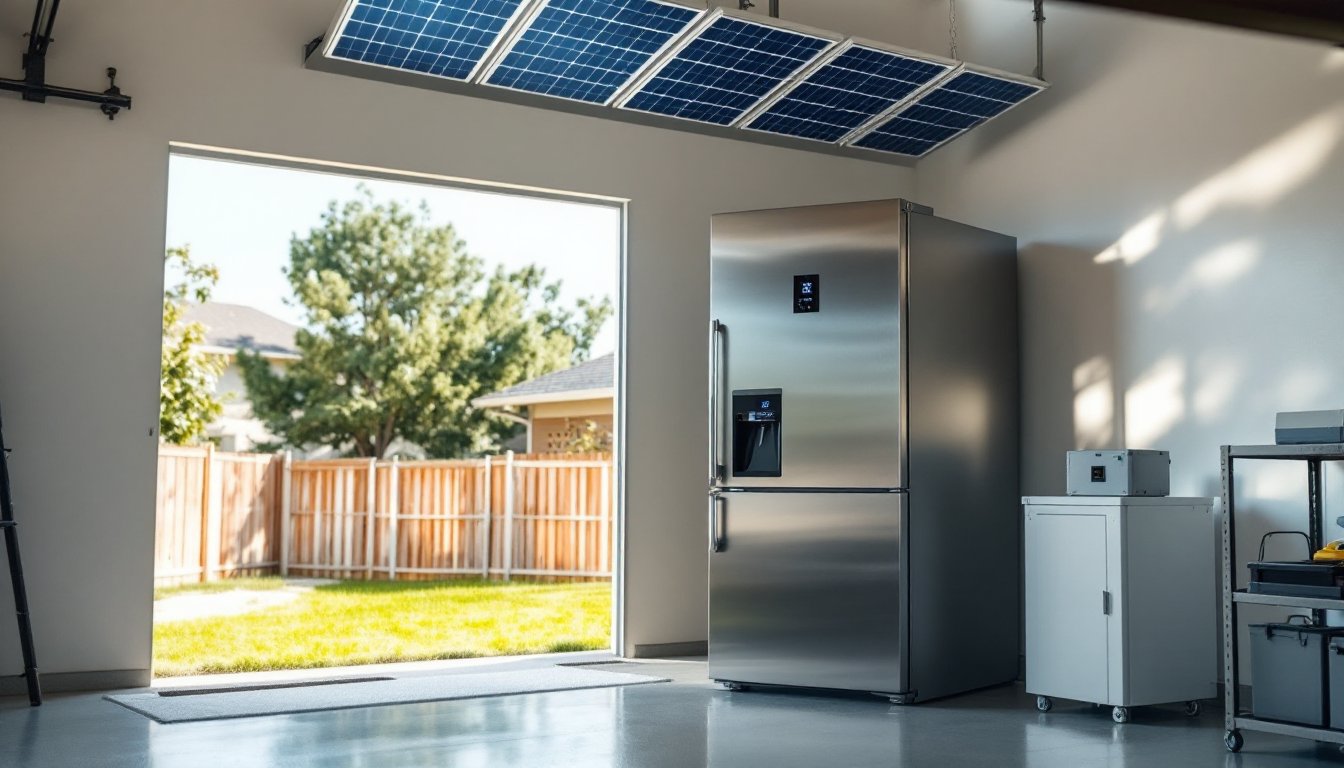
A solar refrigerator operates on electricity generated by solar panels rather than drawing power from the electrical grid. The basic setup includes photovoltaic panels, a charge controller, a battery bank for energy storage, and the refrigerator itself. The solar panels convert sunlight into direct current (DC) electricity, which either powers the fridge directly or charges batteries that supply power during nighttime and cloudy conditions.
The compressor in a solar fridge works similarly to conventional refrigerators, using refrigerant to transfer heat from the interior to the exterior. But, solar models are engineered for maximum efficiency, typically consuming 30-50% less energy than standard units. They use variable-speed compressors that adjust cooling output based on internal temperature rather than cycling on and off repeatedly, which reduces power spikes and extends battery life.
Most solar refrigerators include low-voltage disconnect protection to prevent battery damage from over-discharge. The charge controller regulates voltage from the panels, preventing overcharging while ensuring batteries reach full capacity. Insulation thickness in solar fridges often exceeds 3 inches of polyurethane foam compared to the 1-2 inches found in grid-tied models, which significantly reduces heat transfer and keeps contents cold longer during low-sun periods.
Capacity ranges from compact 1.6 cubic foot units suitable for medical supplies or beverages up to full-size 12-16 cubic foot models that function as primary household refrigerators. Voltage options typically include 12V DC (common for RVs and marine applications), 24V DC (preferred for larger off-grid systems), and dual-voltage models that accept both DC and AC input.
Key Benefits of Solar Refrigerators for Homeowners
The most obvious advantage is zero ongoing electricity cost for refrigeration. Once the initial equipment investment is made, sunlight provides free fuel. For a household running a conventional 20 cubic foot refrigerator at roughly 400-600 kWh annually, switching to solar can save $50-$75 per year at current utility rates, more in regions with expensive electricity or time-of-use pricing.
Energy independence matters more than ever with grid reliability declining in many areas. Solar refrigerators paired with adequate battery storage keep running during outages, preserving food and medications without the noise, fumes, or fuel costs of a generator. This makes them particularly valuable for homeowners in hurricane zones, wildfire-prone regions, or rural areas with frequent service interruptions.
Environmental impact drops substantially. A typical grid-tied refrigerator indirectly produces around 0.4 tons of CO₂ annually depending on the local power generation mix. Solar refrigeration eliminates those emissions entirely. Units designed for solar use also employ more eco-friendly refrigerants like R600a (isobutane) instead of traditional HFCs with high global warming potential.
Noise levels are noticeably lower. The efficient compressors in solar models run quieter than conventional fridges, typically producing 35-40 decibels compared to 45-50 decibels for standard units. This makes them suitable for workshops, home offices, or open-plan living spaces where appliance noise is intrusive.
Installation flexibility increases since the fridge doesn’t need proximity to grid power. Homeowners can place units in detached garages, pool houses, barns, or garden sheds without running new electrical circuits or hiring an electrician for outlet installation.
Types of Solar Refrigerators: DC vs. AC Models
DC (Direct Current) refrigerators connect directly to solar panels and batteries without requiring an inverter. They’re the most efficient option for off-grid use because they eliminate the 10-15% energy loss that occurs when converting DC to AC power. DC models typically run on 12V or 24V systems, matching standard solar battery banks. They’re ideal for RVs, boats, tiny homes, and dedicated solar setups where grid power isn’t available or desired.
The downside of DC-only units is limited availability and higher upfront cost. Fewer manufacturers produce them, and prices often run 20-40% higher than comparable AC models. But, long-term efficiency gains usually offset this premium within 3-5 years for full-time off-grid applications.
AC (Alternating Current) refrigerators operate on standard household 120V power, which means they require an inverter to convert DC solar power to AC. This adds equipment cost (inverters range from $200 for basic 1000W models to $2000+ for pure sine wave units with high surge capacity) and introduces conversion losses. But, AC solar fridges are often just high-efficiency conventional models, making them cheaper to purchase and easier to replace if needed.
Some homeowners prefer AC models because they can switch between solar and grid power seamlessly. During extended cloudy periods, the fridge can draw from the electrical panel without any configuration changes. This flexibility appeals to those using solar as supplemental rather than exclusive power.
Dual-voltage models accept both DC and AC input, automatically switching between power sources. These units offer maximum versatility but come at a price premium, typically 15-25% more than single-voltage equivalents. They’re worth considering for seasonal cabins or workshops where power sources vary, or for homeowners who want backup grid capability during system maintenance.
Choosing the Right Solar Refrigerator for Your Home
Start with daily energy consumption, measured in watt-hours (Wh). A quality solar refrigerator should use 30-60 Wh per cubic foot per day depending on insulation quality, ambient temperature, and usage patterns. An 8 cubic foot model might consume 300-400 Wh daily, while a 16 cubic foot unit could require 600-800 Wh. Multiply daily consumption by 1.5 to account for battery charging inefficiency and inverter losses if using AC.
Match capacity to actual needs rather than duplicating what’s currently in the kitchen. Households accustomed to a 22 cubic foot side-by-side might function fine with a 12 cubic foot solar unit by eliminating excess bulk purchases and reducing food waste. Independent freezer compartments versus combo units matter too, separate doors minimize cold air loss when accessing frequently used sections.
Insulation thickness directly impacts performance. Look for models with 3-4 inches of high-density polyurethane foam and magnetic gasket seals that create airtight closures. Top-opening chest-style refrigerators retain cold better than front-opening models since cold air sinks rather than spilling out when the door opens. But, chest models sacrifice convenience and organization.
Temperature range matters for specific applications. Standard refrigerators maintain 35-40°F, but some solar models offer adjustable ranges from -4°F to 50°F, functioning as refrigerators, freezers, or wine coolers depending on settings. Medical and vaccine storage requires units with tight temperature control (±2°F variance) and battery backup alarms.
Consider climate conditions. Units rated for 90°F+ ambient temperatures include heavier-duty compressors and larger condensers. Homeowners in consistently hot regions should prioritize models tested for their conditions rather than assuming any solar fridge will perform equally everywhere. Reviews from smart appliance testing sources often reveal real-world performance gaps between manufacturer specs and actual hot-weather operation.
Installation and Setup: What You Need to Know
Calculate total solar panel wattage by dividing daily refrigerator consumption by average sun hours in the location. For a fridge using 500 Wh daily in an area receiving 5 peak sun hours, the calculation is 500 ÷ 5 = 100 watts minimum panel capacity. But, account for inefficiency, seasonal variation, and battery charging by multiplying by 1.5-2, bringing the recommended panel capacity to 150-200 watts. Homeowners aiming for year-round reliability in northern climates should size for winter sun hours, which might be only 3-4 hours daily.
Battery bank sizing requires storing at least 2-3 days of refrigerator runtime for cloud coverage and winter conditions. A 500 Wh daily load needs 1000-1500 Wh (1-1.5 kWh) of usable battery capacity. Since lead-acid batteries shouldn’t discharge below 50% for longevity, double this to 2-3 kWh total capacity. Lithium batteries allow 80% depth of discharge, requiring only 1.25-1.875 kWh capacity, though they cost significantly more upfront.
Safety equipment includes:
- Inline fuses or circuit breakers rated 25% above maximum expected current
- Properly sized wire gauge (10 AWG for most 12V runs under 15 feet, 8 AWG for longer distances)
- Ventilated battery enclosure if using lead-acid batteries (they emit hydrogen gas during charging)
- DC disconnect switches between major system components
Panel mounting should face true south in the Northern Hemisphere (true north in Southern Hemisphere) at an angle equal to the site’s latitude for year-round performance, or adjusted seasonally for optimization. Roof mounting is common but complicates maintenance: ground mounts provide easier access for cleaning and snow removal.
Charge controller selection depends on system voltage and total panel wattage. MPPT (Maximum Power Point Tracking) controllers cost more than PWM (Pulse Width Modulation) types but deliver 20-30% more power, especially important in cold weather or when panels and batteries operate at different voltages. Size the controller to handle 125% of panel array short-circuit current.
Physical refrigerator placement should allow 2-3 inches clearance on all vented sides for airflow. Poor ventilation forces the compressor to work harder, increasing power consumption by 10-20%. Keep the unit out of direct sunlight and away from heat sources like water heaters or furnaces. In kitchen installations, ensure adequate spacing even in tight layouts.
Maintenance Tips to Maximize Performance and Lifespan
Clean condenser coils every 3-4 months to remove dust, pet hair, and debris that insulate coils and reduce heat dissipation. Most solar refrigerators have external coils accessible from the back or bottom. Use a soft brush or vacuum attachment, avoid pressure washers or harsh chemicals that damage fins. Dirty coils can increase energy consumption by 25% or more.
Inspect door gaskets quarterly by closing the door on a dollar bill: if it pulls out easily, the seal is compromised. Clean gaskets with mild soap and water, then apply a thin coating of petroleum jelly to keep rubber supple. Warped or cracked gaskets should be replaced immediately, air leaks waste more energy than any other refrigerator problem.
Check battery water levels monthly if using flooded lead-acid batteries. Top off with distilled water only, maintaining levels 1/4 inch above the plates. Wear safety goggles and gloves when handling batteries, sulfuric acid causes severe chemical burns. Lithium batteries require no watering but benefit from periodic balance charging per manufacturer specifications.
Monitor system voltage regularly. If a 12V battery bank reads below 12.2 volts (resting voltage after several hours with no load), the batteries are below 50% capacity and need longer charging time or additional panels. Chronically undercharged batteries sulfate and lose capacity permanently.
Panel cleaning frequency depends on location. Dusty or agricultural areas may need monthly cleaning, while most residential sites do fine with quarterly washing. Use plain water and a soft sponge, soap residue can attract more dirt. Early morning cleaning prevents thermal shock from cold water hitting hot panels. Performance guides from appliance testing organizations often include seasonal maintenance checklists.
Temperature settings matter for efficiency. Every degree below necessary increases energy use by roughly 5%. A refrigerator set at 37°F instead of 40°F consumes 15% more power for minimal food safety benefit. Freezers should run at 0-5°F, not the -10°F some homeowners assume is better.
Defrost manual-defrost models when frost buildup exceeds 1/4 inch thickness. Ice insulates the evaporator coils and forces longer compressor run times. Turn off the unit, remove contents to a cooler, and let ice melt naturally or speed the process with bowls of hot water (never use sharp tools that might puncture refrigerant lines).
Conclusion
Solar refrigeration delivers genuine energy independence and cost savings for homeowners willing to invest in properly sized systems. Success depends on matching refrigerator capacity to actual needs, calculating solar and battery requirements based on local sun conditions, and maintaining both the fridge and power system regularly. Start with honest usage assessment, factor in seasonal sunlight variation, and don’t skimp on battery capacity, those are the three most common failure points in DIY solar refrigeration projects.