
Table of Contents
ToggleShopping for a new Frigidaire dishwasher isn’t just about grabbing the cheapest model on the showroom floor. Whether you’re upgrading from a worn-out unit or installing a dishwasher for the first time, understanding the differences between Frigidaire’s lineup, from basic stainless steel models to feature-packed Gallery and Professional series, can save you hundreds of dollars and years of frustration. Frigidaire has built a solid reputation for reliability and value in the appliance world, but not all dishwashers are created equal. This guide breaks down what you actually need to know: which models deliver the best bang for your buck, what features matter in real-world use, and how to keep your fridgidaire dishwasher running smoothly for the next decade.
Key Takeaways
- Frigidaire dishwashers offer excellent price-to-performance value, with mid-range models costing $400–$700 and delivering stainless steel tubs, adjustable racks, and reliable performance without premium pricing.
- The Gallery Series represents the best value for most homeowners, featuring OrbitClean spray arms, EvenDry fan-assisted drying, and noise reduction at 49–51 dBA for $600–$850.
- Monthly filter cleaning, quarterly door seal maintenance, and regular cleaning cycles are essential to keep your Frigidaire dishwasher running smoothly for 8–10 years of service life.
- Key features like DualZone wash, NSF-certified sanitize cycles, and soil sensors provide practical benefits, while WiFi connectivity typically adds unnecessary cost with minimal real-world value.
- Most common dishwasher issues—poor cleaning, drainage problems, and leaks—stem from clogged filters, improper detergent use, or simple maintenance oversights easily fixed without professional help.
- Replacement typically makes financial sense when a Frigidaire dishwasher repair estimate exceeds 50% of a new unit’s cost, especially considering improved energy efficiency saves $35–$50 annually.
Why Choose a Frigidaire Dishwasher for Your Home?
Frigidaire occupies a sweet spot in the appliance market: more features than budget brands, less markup than luxury names. That positioning makes sense for most DIY homeowners tackling a kitchen remodel or replacing a failing unit.
Price-to-performance ratio is where Frigidaire shines. A mid-range frigidare dishwasher typically costs $400–$700, delivering stainless steel tubs, adjustable racks, and decent wash cycles without the $1,200+ price tags of premium competitors. You’re paying for proven engineering, not marketing hype.
Parts availability matters more than most buyers realize. Frigidaire is owned by Electrolux, a global appliance giant, which means replacement parts stay in production longer than boutique brands. When a spray arm cracks or a door latch fails five years down the line, you won’t be hunting eBay for discontinued components.
Standard sizing simplifies installation. Most Frigidaire models follow the industry-standard 24-inch width, fitting existing cabinet openings without modification. If you’re swapping out an old unit, you’ll likely need only basic hand tools and an adjustable wrench to connect water and drain lines, no cabinet surgery required.
One honest drawback: Frigidaire dishwashers aren’t the quietest on the market. Base models run around 52–55 dBA, which is noticeable in open-concept kitchens. If near-silent operation is non-negotiable, you’ll want to step up to Gallery or Professional series with enhanced insulation.
Top Frigidaire Dishwasher Models and Series Compared
Frigidaire segments its dishwasher lineup into three tiers, each targeting different priorities. Knowing where you fall on the spectrum saves you from overpaying for features you won’t use, or buying too cheap and regretting it.
Base models (typically under $450) cover the essentials: stainless steel tubs for better drying, plastic or nylon racks, and 4–5 wash cycles. These units handle everyday dishes just fine but lack the refinements that make loading easier or cleaning more thorough. Expect noise levels around 52–54 dBA. If you’re on a tight budget or furnishing a rental property, base models get the job done.
Gallery Series: Premium Performance
The Gallery series represents Frigidaire’s best value for homeowners who cook regularly. Key upgrades include:
- OrbitClean spray arm technology: A rotating spray arm on the upper rack that targets stuck-on food, reducing pre-rinsing. This feature alone saves water and time.
- EvenDry system: Uses a fan and heating element to eliminate the wet-dish problem that plagues many dishwashers. According to independent appliance testing programs, fan-assisted drying significantly outperforms passive condensation methods.
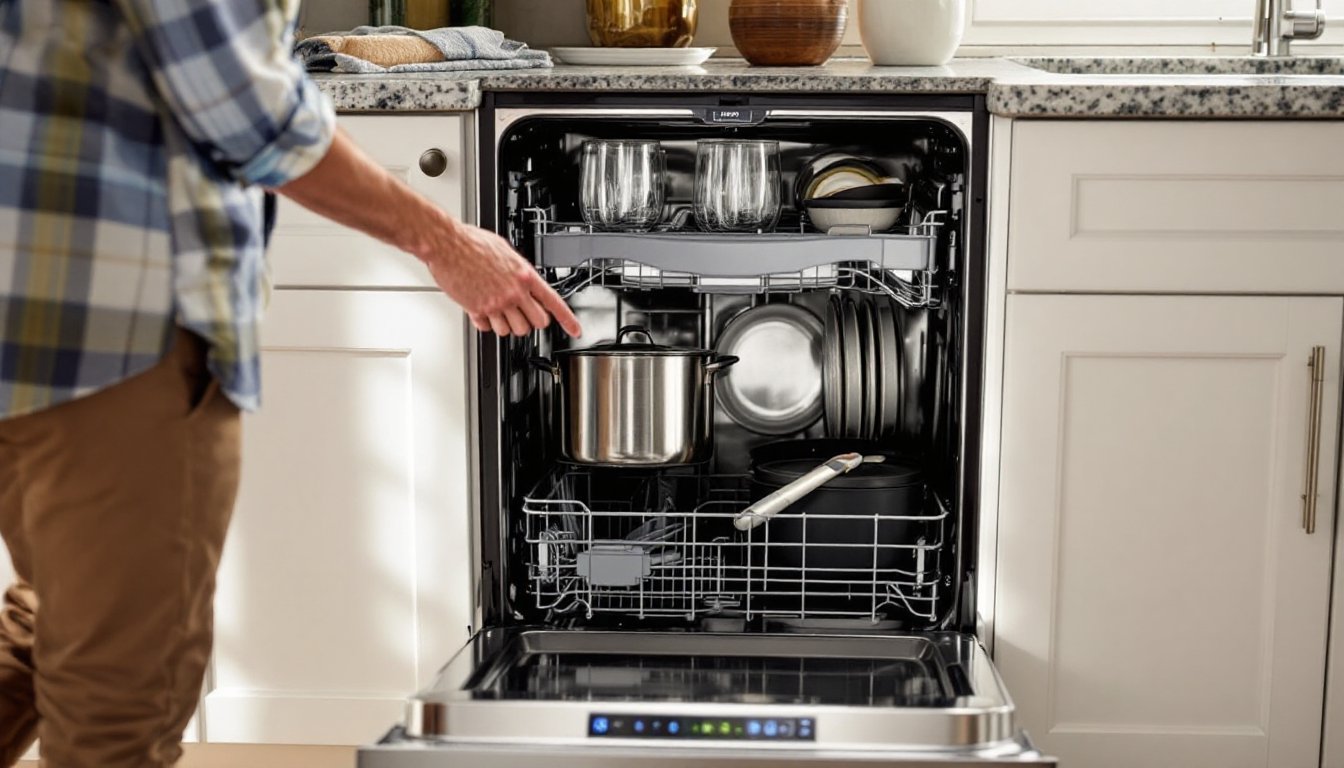
- Adjustable upper rack: Raises or lowers to accommodate tall items like stock pots or oversized platters. The mechanism is sturdier than base models, less plastic, more metal hardware.
- Noise reduction: Insulation upgrades drop sound levels to 49–51 dBA, quiet enough for open kitchens.
Gallery models run $600–$850 depending on finish (stainless, black stainless, or smudge-proof stainless steel dishwasher options). The smudge-proof coating actually works, fingerprints wipe off with a damp cloth instead of requiring dedicated stainless cleaner.
Professional Series: Commercial-Grade Cleaning
The Professional series brings commercial-kitchen durability to residential installs. These units feature:
- Heavy-duty stainless steel racks: Not just tines, the entire rack assembly uses thicker-gauge steel with reinforced weld points. If you regularly wash cast iron or heavy cookware, this matters.
- Bottle-wash jets: Dedicated spray nozzles in the upper rack that target narrow openings like water bottles, vases, or baby bottles.
- PrecisionPro Dry system: Enhanced version of EvenDry with higher fan capacity and longer cycle times, ensuring bone-dry dishes even with plastics.
- Adjustable third rack: A full-width shallow rack for utensils, spatulas, and small lids, frees up space below.
Professional models start around $900 and climb past $1,100 for fully loaded configurations. Unless you’re a serious home cook or entertain frequently, most homeowners won’t use enough of the Pro features to justify the premium. Gallery series hits the sweet spot for 80% of kitchens.
Key Features That Set Frigidaire Dishwashers Apart
Understanding which features actually improve daily use, versus marketing gimmicks, helps you spend wisely when comparing models.
DualZone wash capability lets you run lighter wash on the top rack while hitting the bottom with heavy-duty cleaning. Practical scenario: lightly soiled glasses up top, baked-on lasagna pans below. You’re not wasting water and energy on a full heavy cycle when half the load doesn’t need it.
NSF-certified sanitize cycle heats water to 150°F during the final rinse, killing 99.9% of bacteria. If you wash cutting boards, baby items, or care for immunocompromised family members, this cycle provides peace of mind. Note: Your home water heater doesn’t need to hit 150°F, the dishwasher has an internal booster heater.
Delay start timers (4-hour, 8-hour, or 24-hour options depending on model) let you run cycles during off-peak electricity hours if you’re on time-of-use utility rates. Set it before bed, and dishes are done by morning using cheaper overnight power.
Soil sensors adjust cycle length and water usage based on how dirty the load actually is. Many kitchen appliance experts recommend skipping the pre-rinse and letting the sensor do its job, modern dishwashers clean better when they detect food particles.
Hard food disposers grind up small particles rather than relying on a simple filter screen. Frigidaire’s disposer systems reduce the frequency of manual filter cleaning from weekly to monthly, assuming you scrape plates before loading.
One feature you’ll see advertised but may not need: WiFi connectivity. Frigidaire offers app control on select models, letting you start cycles remotely or receive maintenance alerts. Unless you’re building a full smart home ecosystem, the added cost (usually $50–$100) delivers minimal practical value for a dishwasher. You’re standing in the kitchen to load it anyway.
Installation and Maintenance Tips for Frigidaire Dishwashers
Most Frigidaire dishwashers are DIY-friendly installs if you’re replacing an existing unit. New installs, cutting into cabinetry, running new drain lines, adding electrical circuits, typically require a plumber and electrician unless you’re experienced with both trades.
Pre-installation checklist:
- Electrical: Dishwashers require a dedicated 120V, 15-amp circuit. Check your local electrical code, some jurisdictions require GFCI protection for kitchen appliances. If your old dishwasher was hardwired, you can reuse that connection: if it was plug-in, verify the outlet is within reach of the new unit’s cord.
- Water supply: Most fridgidaire dishwasher models connect to a 3/8-inch compression fitting with a braided stainless steel supply line. Shut off the water at the angle stop valve under your sink before disconnecting anything. Have a bucket and towels ready, residual water will drain.
- Drain connection: The drain hose connects to your sink’s drain line or garbage disposal. Critical: the drain hose must form a high loop (secured to the underside of the countertop) to prevent backflow. Some codes require an air gap fitting at the sink deck, check your local plumbing code.
- Leveling: Use the adjustable front legs to level the unit side-to-side and front-to-back. An unlevel dishwasher won’t drain properly, leaving standing water and funky smells.
Ongoing maintenance is minimal but essential:
- Clean the filter monthly. Located at the tub bottom, the filter catches food particles. Rinse under hot water and scrub with an old toothbrush. A clogged filter kills cleaning performance and can burn out the drain pump.
- Wipe door seals quarterly with a damp cloth and mild detergent. Grease and grime buildup on the gasket causes leaks.
- Run a cleaning cycle every 3–4 months using dishwasher cleaner tablets (not dish soap). This removes mineral deposits and grease buildup from the spray arms and tub.
- Inspect spray arms twice yearly. Remove them (they usually twist off) and clear any clogged holes with a toothpick or wire.
If you have hard water, consider installing an inline water softener on the supply line. Mineral deposits shorten dishwasher lifespan and leave spots on glassware. Whole-house softeners work too, but a point-of-use unit costs $30–$60 and installs in minutes.
Troubleshooting Common Frigidaire Dishwasher Issues
Most dishwasher problems stem from clogged components or simple user error. Before calling a repair tech at $100+ per visit, try these fixes.
Dishes aren’t getting clean:
- Check the filter first, 90% of poor cleaning comes from a clogged filter restricting water flow.
- Verify you’re using fresh detergent. Powdered detergent absorbs moisture and clumps over time: pods have a shelf life of about 15 months.
- Don’t overload racks. Crowded dishes block spray arms from reaching all surfaces.
- Run hot water at the sink before starting the cycle. Dishwashers clean best when incoming water is already hot (120°F minimum).
Dishwasher won’t drain:
- Check the drain hose for kinks or clogs. Disconnect it from the disposal/drain line and run water through it into a bucket.
- Remove and clean the filter and sump area. Food particles can block the drain pump impeller.
- If you have a garbage disposal, make sure the knockout plug was removed when the dishwasher was installed. Many DIYers forget this step, the plug blocks the drain connection.
Water leaking from the door:
- Inspect the door gasket for cracks, tears, or debris. Replace if damaged (part costs $20–$40, installs by pressing into the groove).
- Check that the door isn’t sagging. Tighten the hinge screws on both sides.
- Verify you’re using HE dishwasher detergent, not regular dish soap. Too many suds cause leaks, if you accidentally used dish soap, run empty rinse cycles until suds are gone.
Unusual noises:
- A grinding sound usually means a hard object (glass shard, bottle cap) is stuck in the drain pump or spray arm bearing. Stop the cycle and inspect.
- Rattling during wash often comes from loose spray arms. Make sure they spin freely and are properly seated.
- Humming without water flow points to a jammed circulation pump. This requires disassembly, consider calling a tech unless you’re comfortable pulling the unit out and accessing the pump.
According to home appliance reliability studies, Frigidaire dishwashers average 8–10 years of service life with proper maintenance. If your unit is approaching that age and experiencing multiple issues, replacement often makes more financial sense than repeated repairs. Factor in improved energy efficiency, a new Energy Star dishwasher uses 3.5 gallons per cycle versus 6+ gallons for older models, saving $35–$50 annually on water and electricity.
When to call a professional:
- Water leaking from underneath (often a pump seal or tub crack)
- Error codes that persist after basic troubleshooting
- Electrical issues (tripped breakers, no power to unit)
- Pump motor failure (no sound when cycle starts)
Most repairs cost $150–$300 including parts and labor. If the repair estimate exceeds 50% of a new dishwasher’s price, replacement is usually the smarter play, especially if the unit is over six years old. New dishwashers come with manufacturer warranties (typically one year parts and labor) and deliver better cleaning with lower utility costs.