
Table of Contents
ToggleYour dishwasher is probably the hardest-working appliance in the kitchen, and often the most visually overlooked. Whether it’s a mismatched color, a scratched-up panel, or just a boring stainless steel front that doesn’t fit your design vision, there’s a simple, renter-friendly fix that doesn’t involve a plumber or a new appliance. Dishwasher magnet covers offer a low-cost, zero-commitment way to refresh your kitchen’s look in under five minutes. They’re popular among DIYers who want custom style without the permanent alterations, and they’re gaining traction in 2026 as renters and homeowners alike look for flexible design solutions. This guide walks through everything from choosing the right cover to installing it correctly, plus creative DIY options if you want to go custom.
Key Takeaways
- A dishwasher magnet cover is an affordable, renter-friendly solution ($20–$50) that instantly refreshes your kitchen without permanent alterations or professional installation.
- Dishwasher magnet covers come in multiple styles—vinyl photo-prints, chalkboard, custom designs, and textured options—allowing you to match any kitchen aesthetic from modern stainless to farmhouse.
- Proper measurement and surface preparation are critical: measure the flat magnetic panel (typically 24″ W × 24–27″ H), clean with a degreaser, and test magnet strength before applying your cover.
- DIY alternatives like custom-printed magnetic sheets, chalkboard paint on magnetic primer, and fabric-backed magnetic vinyl give you complete creative control if pre-made designs don’t match your vision.
- Maintain your magnet cover by cleaning with mild soap and water, avoiding harsh chemicals, checking edges for peeling, and storing seasonal designs flat in a cool, dry place for long-lasting results.
What Is a Dishwasher Magnet Cover and Why Do You Need One?
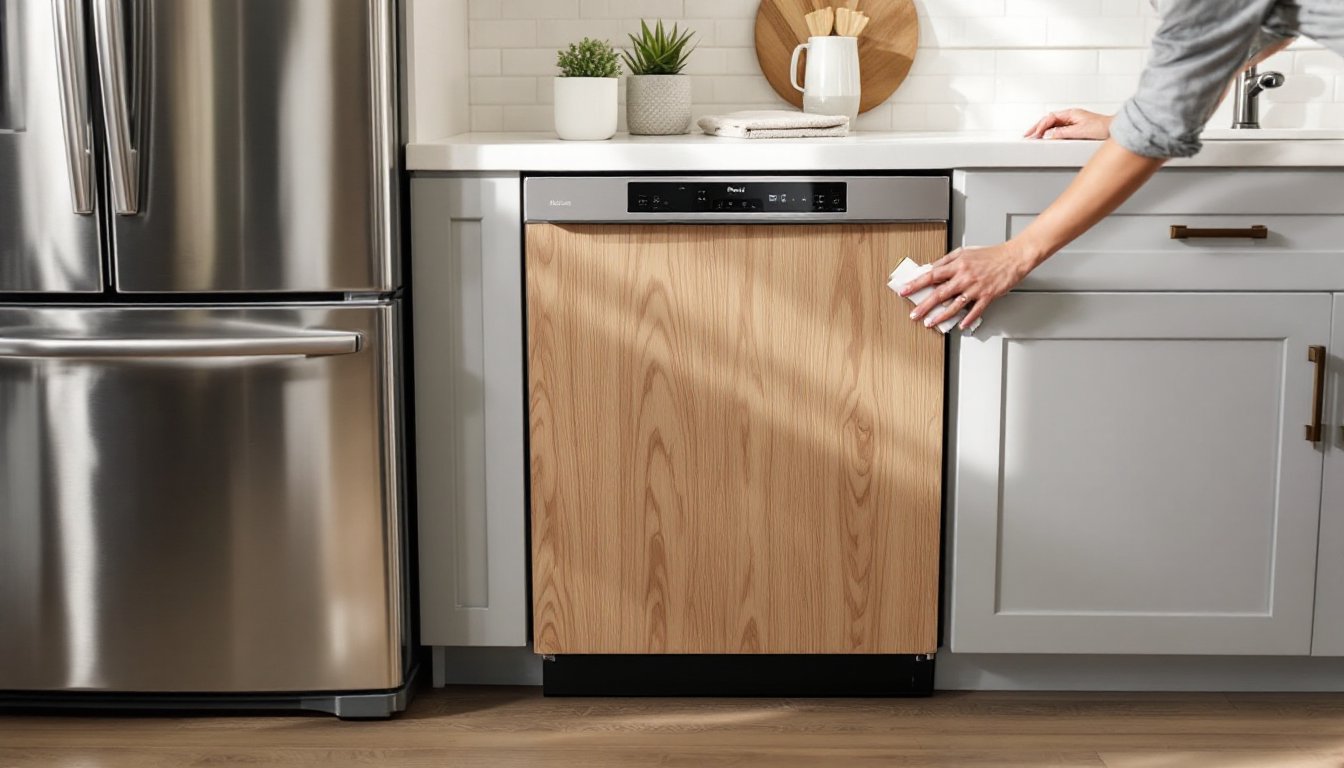
A dishwasher magnet cover (also called a magnetic dishwasher door cover) is a large vinyl or fabric panel with a magnetic backing that adheres directly to the metal surface of your dishwasher door. Most standard dishwashers have a steel front panel, making them compatible with magnets. These covers come pre-printed with designs ranging from realistic wood grain and faux stainless steel to custom graphics, chalkboard finishes, or seasonal themes.
The primary benefit is cosmetic: if you’ve got a white dishwasher in an all-stainless kitchen, or a scratched panel that’s seen better days, a cover instantly hides those flaws. But there’s also a practical angle. Decorative dishwasher magnet covers can unify the look of mismatched appliances without the cost of replacement, think $20 to $50 versus $400+ for a new unit.
They’re fully removable, so they’re ideal for renters or anyone who likes to switch up their decor seasonally. No adhesive residue, no hardware, no damage to the original surface. If you’re flipping a rental or staging a home for sale, a magnet cover can make the space feel more cohesive without violating lease terms.
One thing to note: not all dishwashers are magnetic. Some models (especially older plastics or certain stainless composites) won’t hold a magnet. Test with a refrigerator magnet before ordering.
Types of Dishwasher Magnet Covers for Every Kitchen Style
Covers fall into a few broad categories based on material, finish, and design complexity.
Vinyl photo-print covers are the most common. These use high-resolution images printed on flexible magnetic vinyl, think faux wood grain, black stainless, marble, or even scenic artwork. The print quality has improved significantly in the last few years: some mimic real materials well enough to fool a casual glance. Expect UV-resistant inks and a matte or semi-gloss laminate to resist kitchen moisture.
Chalkboard or dry-erase magnetic covers add function to form. They’re typically black vinyl coated with chalkboard paint or a dry-erase laminate, letting you jot down grocery lists, menu plans, or kids’ drawings. These work best in casual or farmhouse-style kitchens where the utilitarian look fits the vibe.
Custom-printed covers let you upload your own image, family photos, graphic designs, or branded logos if you’re outfitting a commercial kitchen or short-term rental. Print-on-demand services usually charge a premium ($40–$80), but you get a one-of-a-kind piece.
Textured or 3D covers use embossed vinyl to simulate brushed metal, wood grain, or tile patterns. The added texture can help sell the illusion, especially under kitchen lighting. These tend to be slightly thicker (around 0.8mm versus 0.5mm for standard vinyl) and cost a bit more.
Some manufacturers also offer seasonal or themed designs, holiday patterns, coastal motifs, or retro advertising prints. These are a niche option but useful if you like rotating your decor.
How to Choose the Perfect Dishwasher Magnet Cover for Your Home
Start by considering your overall kitchen aesthetic. If you’re going for a cohesive look, match the cover to your cabinetry or other appliances. A faux wood grain cover pairs well with natural wood cabinets or butcher-block countertops. A black stainless or brushed nickel print works in modern kitchens with stainless or matte black appliances.
Check the material thickness. Thinner vinyl (0.3–0.5mm) is easier to apply smoothly but may show minor dents or waviness on uneven doors. Thicker vinyl (0.7–1.0mm) holds its shape better and tends to last longer, especially in high-traffic kitchens. Most reputable covers use 0.6–0.8mm magnetic vinyl, which balances durability and ease of installation.
Look for UV-resistant, waterproof coatings. Kitchens see a lot of moisture, grease, and occasional splashes. A laminated or coated surface will hold up better to cleaning and won’t fade under overhead lighting. Some covers also advertise anti-fingerprint finishes, which help on high-gloss or dark designs.
Consider whether you want a full-panel cover or a decorative overlay. Full-panel covers are designed to match standard dishwasher dimensions and cover the entire front. Overlays are smaller graphics or decals that sit on top of the existing finish, useful if you like the base color but want to add a focal point or branding.
Measuring Your Dishwasher for the Right Fit
Most dishwashers are 24 inches wide, but door heights vary by model. Standard built-in dishwashers typically have a door panel measuring 24″ W × 24–27″ H (the visible front, not including the handle or trim). Compact or drawer-style units will be different.
Use a tape measure to check the width and height of the flat, magnetic surface, ignore the handle, control panel, and any trim. Measure from edge to edge of the metal panel. If your dishwasher has a recessed or protruding handle, measure around it and note its position.
Many magnet cover suppliers offer standard sizes (24″ × 24″, 24″ × 26″, 24″ × 27″) and custom sizing for an additional fee. Ordering a size that’s slightly smaller (e.g., 23.5″ × 25.5″) can help avoid overlap onto non-magnetic trim or handles.
If you’re unsure, grab a piece of cardboard or kraft paper, cut it to rough dimensions, and test-fit it on the door before ordering. This is especially helpful for older or European models with non-standard dimensions.
Installation Guide: How to Apply a Dishwasher Magnet Cover
Installation is straightforward, but taking a few extra minutes on prep will ensure a smooth, bubble-free finish.
Step 1: Clean the Surface
Wipe down the dishwasher door with a degreasing cleaner or a 50/50 mix of white vinegar and water. Remove any grease, fingerprints, or residue. Dry thoroughly with a microfiber cloth. Any grit or moisture trapped under the magnet will show as a bump or cause the cover to lift over time.
Step 2: Test Magnet Strength
Before peeling off any backing, hold the cover (still rolled or folded) against the door to confirm it sticks. If the magnet feels weak, the door may not be fully steel. Some “stainless” panels are actually a thin steel skin over plastic: these can still work but may need extra care during application.
Step 3: Align the Top Edge
Most magnetic dishwasher door covers come rolled. Unroll it and position the top edge first, aligning it with the top of the door panel (just below the control panel or handle, depending on your model). Let the magnet lightly tack in place, don’t press hard yet.
Step 4: Smooth Downward
Starting from the center, use a plastic squeegee, credit card, or the edge of your hand to smooth the cover downward in overlapping vertical strokes. Work out any air bubbles or wrinkles as you go. If a bubble appears, gently lift that section and re-apply with light tension.
Step 5: Trim if Necessary
If the cover overhangs the edges or interferes with the door handle, use a sharp utility knife or scissors to trim excess material. Score lightly along the edge of the door frame, then peel away the scrap. Be careful not to scratch the underlying finish.
Step 6: Final Press
Once aligned and bubble-free, press firmly across the entire surface to ensure full contact. Pay extra attention to the edges and corners, which are most prone to lifting.
Safety note: If your dishwasher has an external heating element or vent on the door, ensure the magnet doesn’t obstruct airflow. Most covers are thin enough that this isn’t an issue, but double-check your model’s manual if you’re unsure.
Creative DIY Dishwasher Magnet Cover Ideas
If you can’t find a pre-made design that fits your vision, or you just like building things yourself, DIY options are wide open.
Custom-printed magnetic sheets are available from online print shops and some office supply stores. Upload your own high-resolution image (at least 300 dpi at full size), and they’ll print it on magnetic vinyl. Many kitchen design enthusiasts use this method to create covers that perfectly match their backsplash tile or cabinet color.
Chalkboard paint on magnetic primer is another route. Apply magnetic primer (available at most home centers) to a piece of 0.5mm sheet steel or galvanized metal cut to size, then top-coat with chalkboard paint. This creates a functional, writable surface that’s fully magnetic. It’s heavier than vinyl and requires fasteners or a frame to hold it in place, but it’s more durable for long-term use.
Fabric-backed magnetic sheets let you use any fabric you like, linen, canvas, printed cotton, even outdoor upholstery fabric. Buy adhesive-backed magnetic sheeting (commonly sold in rolls at craft stores), cut it to size, and adhere your fabric to the non-magnetic side. Spray the fabric with a fabric protector or clear acrylic sealer to resist stains and moisture. This works well in farmhouse or cottage-style kitchens.
Modular tile or panel designs use smaller magnetic squares or rectangles arranged in a grid. You can mix patterns, swap out individual pieces seasonally, or let kids rearrange them. Cut magnetic vinyl into 6″ × 6″ or 8″ × 8″ tiles, apply different prints or colors, and arrange them on the door. This approach is forgiving if you mess up a piece, just swap it out.
For a truly custom build, some DIY repair tutorials cover how to laminate your own photos or artwork onto magnetic backing using a cold laminator and spray adhesive. It’s more labor-intensive but gives you total control over the final look.
Care and Maintenance Tips for Long-Lasting Results
Magnetic covers are low-maintenance, but a few habits will keep them looking sharp for years.
Clean with mild soap and water. Use a soft sponge or microfiber cloth, avoid abrasive scrubbers or scouring pads, which can scratch the printed surface. For grease or sticky residue, a drop of dish soap or a diluted all-purpose cleaner works well. Wipe dry to prevent water spots.
Avoid harsh chemicals. Bleach, ammonia-based cleaners, and acetone can damage the vinyl and fade the print. Stick to pH-neutral cleaners. If you’re using a chalkboard-style cover, use chalk markers designed for non-porous surfaces (they wipe off with a damp cloth) rather than traditional dusty chalk, which can leave residue.
Check the edges periodically. Over time, the corners or edges may start to lift, especially in high-humidity kitchens. If you notice peeling, clean the area, let it dry completely, and press the magnet back into place. A tiny dab of clear silicone adhesive on the underside of the corner can provide extra hold without permanent bonding, just use it sparingly.
Remove and re-apply if moving or deep-cleaning. If you’re moving or need to deep-clean behind the dishwasher, peel the cover off starting from one corner. Roll it loosely (print side out) and store it flat or in a tube to avoid creases. When re-applying, follow the same installation steps as the initial install.
Protect from excessive heat. Most vinyl covers are rated for normal kitchen temperatures, but if your dishwasher vents hot air directly onto the door surface, prolonged exposure can cause warping or adhesive breakdown. If you notice the cover bubbling or softening after a heavy wash cycle, consider a heat-resistant vinyl or a different installation method (like a framed panel).
Many home organization tips suggest rotating seasonal covers to extend their lifespan, store off-season designs in a cool, dry place, away from direct sunlight, to prevent fading and keep the magnetic backing flexible.