
Table of Contents
ToggleLaminate flooring has become a popular choice for homeowners seeking the look of hardwood without the hefty price tag. But when it comes to maintenance, confusion abounds, especially around steam cleaning. You’ve probably seen the steam mop sitting in your closet and wondered if it’s safe to use on those laminate planks. The short answer? It’s complicated. While steam mops promise deep cleaning and sanitization, laminate floors have a unique construction that makes them vulnerable to moisture damage. This guide cuts through the marketing hype and manufacturer warnings to give you the straight facts about steam mopping laminate floors, plus safer cleaning methods that won’t void your warranty or warp your investment.
Key Takeaways
- Steam mops are not recommended for laminate floors because heat and moisture can penetrate seams, damage the core material, and void manufacturer warranties.
- Laminate flooring has a compressed wood core (HDF or MDF) that absorbs water like a sponge, causing buckling, warping, and delamination when exposed to excessive moisture.
- Microfiber flat mops with pH-neutral or DIY vinegar-water cleaners are the safest alternatives that effectively clean laminate without moisture damage.
- Always wring mops thoroughly so they’re barely damp, wipe spills immediately, and avoid ammonia, bleach, and wax-based products to preserve the wear layer.
- If you must use a steam mop on laminate, use the lowest setting, keep the mop moving, dry immediately after, test in a hidden area first, and understand you’re forfeiting warranty protection.
Understanding Laminate Flooring and Moisture Sensitivity
Laminate flooring isn’t solid wood, it’s an engineered product with multiple layers bonded together under heat and pressure. The core is typically high-density fiberboard (HDF) or medium-density fiberboard (MDF), both made from compressed wood particles and resin. On top sits a photographic layer that mimics wood grain, stone, or tile, sealed beneath a transparent wear layer of melamine or aluminum oxide.
Here’s the critical part: that core is essentially compressed sawdust. When exposed to excessive moisture, HDF and MDF absorb water like a sponge, swelling along the edges and causing planks to buckle, warp, or delaminate. The wear layer protects against surface moisture during normal mopping, but it’s not waterproof at the seams.
Click-lock installation systems, now standard on most laminate products, create tight seams but not watertight ones. Standing water or steam can penetrate these joints, migrating down to the vulnerable core. Once moisture damage occurs, it’s typically irreversible, you’re looking at plank replacement, not repair.
Manufacturers design laminate to handle light surface moisture during cleaning, but they build in very little tolerance for prolonged wetness or high-temperature steam penetration. Understanding this construction helps explain why proper cleaning methods matter so much for longevity.
The Truth About Steam Mops and Laminate Floors
Steam mops generate vapor at temperatures between 212°F and 245°F, delivering deep cleaning power that kills bacteria and dissolves stubborn grime. For tile, sealed stone, and some vinyl products, they’re fantastic. For laminate? That’s where things get dicey.
Most steam mop manufacturers market their products as safe for sealed hard floors, sometimes including laminate in that category. But if you read the fine print on your laminate flooring warranty, you’ll almost certainly find language excluding damage from steam cleaning. That’s not a coincidence.
Why Most Manufacturers Advise Against Steam Mopping
The problem isn’t just the moisture, it’s the combination of heat and moisture delivered under pressure. Steam can force its way into seams and micro-gaps in the wear layer far more effectively than standing water from a damp mop.
Here’s what happens when you use a steam mop on laminate floors:
Heat breaks down adhesives. The resins bonding the photographic layer to the core can soften at high temperatures, leading to delamination over time.
Seam penetration accelerates. Hot vapor condenses as it cools, turning to water inside the joints where it saturates the core material.
Warranty voidance is real. Major laminate manufacturers including Pergo, Armstrong, and Shaw explicitly state that steam cleaning voids product warranties. If you develop warping or swelling and file a claim, they’ll ask about cleaning methods.
Wear layer damage can occur. While the melamine wear layer is durable, repeated exposure to high heat can cause clouding, dulling, or micro-cracking that compromises protection.
Some newer “steam-safe” or “water-resistant” laminate products claim better moisture tolerance, but even these typically come with caveats against steam mopping in the warranty documentation. When manufacturers who make millions selling flooring tell you not to use steam, it’s worth listening.
Safe Alternatives to Steam Mopping Laminate Floors
The good news? You don’t need steam to get laminate floors clean. In fact, the recommended cleaning methods are simpler, faster, and less risky.
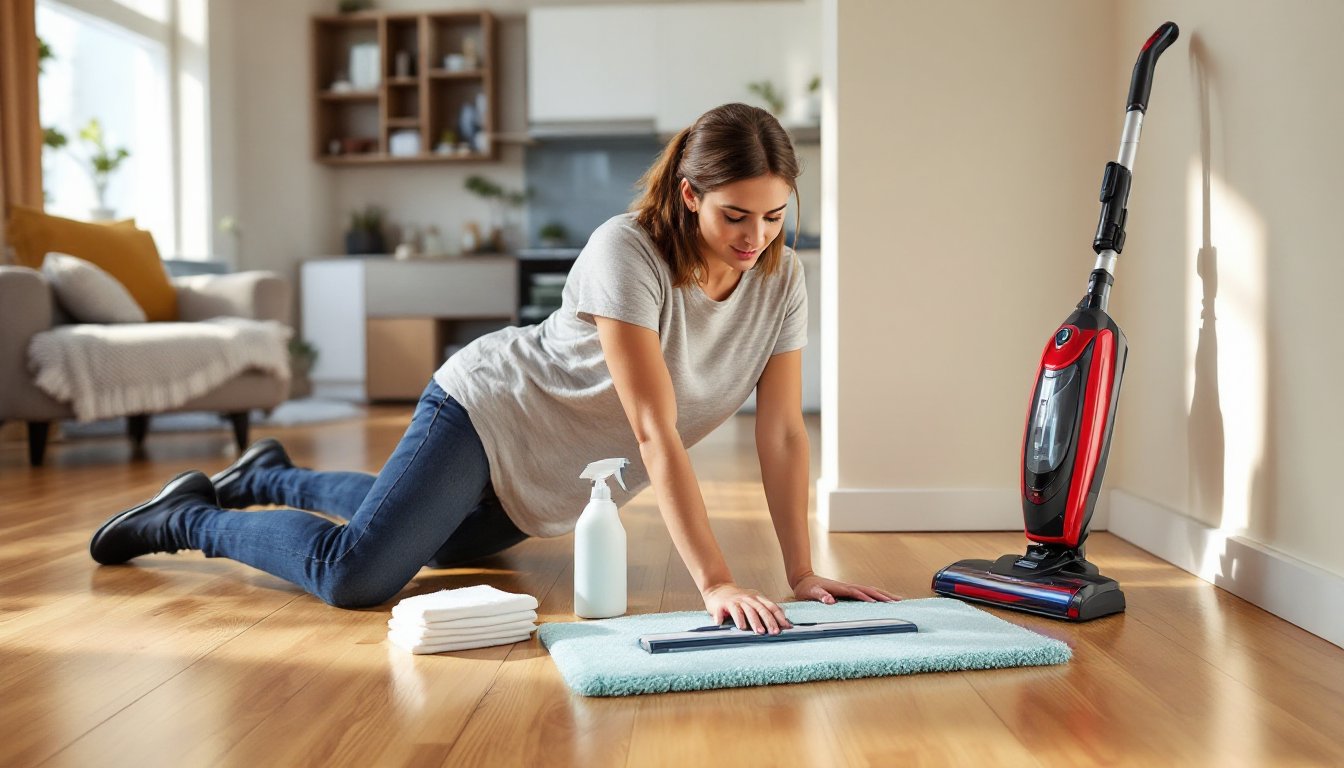
Microfiber flat mops are the gold standard for laminate. They pick up dust, hair, and light debris without scratching, and when dampened, they handle routine cleaning without excess water. Look for mops with removable, machine-washable pads, you’ll go through several as the floors get cleaner.
pH-neutral laminate floor cleaners are formulated specifically for the wear layer chemistry. Avoid products with wax, polish, or oil-based ingredients, which leave residue that dulls the finish. You can also make a DIY solution: mix 1 cup white vinegar with 1 gallon warm water. The acidity cuts grease and grime without damaging the protective layer.
For stubborn spots, dried food, scuff marks, sticky residue, use a damp cloth with a drop of dish soap, then immediately wipe with a clean, dry microfiber towel. The key word is damp, not wet. If you squeeze the cloth and water drips out, it’s too wet.
Best Practices for Cleaning Laminate Without Damage
Sweep or vacuum first. Grit and sand act like sandpaper under a mop, gradually wearing down the protective layer. Use a vacuum with a hard-floor setting (no beater bar) or a soft-bristle broom.
Wring out your mop thoroughly. The mop head should be just barely damp, if it leaves visible wetness on the floor, you’re using too much water. Work in small sections and dry immediately with a clean towel if needed.
Wipe up spills immediately. Don’t let standing water sit on laminate, even for a few minutes. Keep a microfiber cloth handy in high-traffic areas like kitchens.
Avoid ammonia, bleach, and abrasive cleaners. These can cloud or scratch the wear layer. Stick with products explicitly labeled for laminate.
Never use a traditional wet mop and bucket. The old-school string mop dunked in soapy water delivers way too much moisture. If you must use a bucket-style mop, switch to a flat mop with a built-in wringer.
These methods keep laminate looking great for 15-20 years or more, the typical lifespan of quality laminate flooring.
When Steam Mopping Might Be Considered (and How to Minimize Risk)
Let’s be realistic: some homeowners use steam mops on laminate and don’t see immediate damage. If you’re determined to try a steam mop on laminate floors even though manufacturer warnings, there are ways to reduce (but not eliminate) the risk.
Use the lowest steam setting. Many modern steam mops offer variable steam output. Start at the minimum and never crank it to maximum. Less steam means less heat and moisture penetration.
Keep the mop moving constantly. Don’t let the steam mop sit in one spot. Continuous motion prevents heat buildup and concentrated moisture exposure on any single seam or section.
Work in small sections and dry immediately. Have a dry microfiber towel in your other hand. As soon as you steam a 3-4 foot section, wipe it completely dry before moving on.
Test in a closet or inconspicuous area first. Steam a small section in a low-visibility spot and check it after 24-48 hours for any signs of swelling, warping, or cloudiness.
Never steam mop damaged or older laminate. If your floor already has worn seams, chips in the wear layer, or visible gaps, steam will accelerate deterioration. Stick to damp mopping only.
Understand you’re voiding your warranty. Even if you follow every precaution, using a steam mop on laminate means forfeiting any manufacturer protection against moisture damage. That’s a calculated risk only you can decide to take.
For what it’s worth, flooring professionals and resources like Today’s Homeowner consistently recommend against steam mopping laminate, period. The cleaning benefits don’t outweigh the long-term risks for most installations.
Common Mistakes That Damage Laminate Floors
Beyond steam mopping, several common cleaning errors can shorten your laminate floor’s lifespan or void warranties:
Using too much water with any cleaning method. Whether it’s a steam mop, string mop, or spray bottle, excess water is laminate’s worst enemy. If the floor looks wet and shiny after cleaning, you’ve overdone it.
Skipping furniture pads and area rugs. This isn’t about cleaning, but prevention matters. Felt pads under chair and table legs prevent scratches that compromise the wear layer. High-traffic areas benefit from low-pile rugs that catch dirt before it hits the floor.
Using wax or polish products. Laminate’s wear layer doesn’t need waxing, in fact, wax-based products create a hazy buildup that’s nearly impossible to remove. Many homeowners at The Spruce and similar communities report dulling from using the wrong products.
Ignoring manufacturer instructions. Your specific laminate product may have unique requirements. Some newer WPC (wood-plastic composite) core laminates offer better water resistance, while older installations may be more fragile. Check your installation guide or warranty documentation.
Cleaning with a wet Swiffer-type mop too frequently. While these are better than traditional mops, the pre-moistened pads can still deliver more water than necessary if used daily. For routine maintenance, dry or barely-damp microfiber works better.
Not addressing damage promptly. If a plank chips or a seam starts lifting, moisture can penetrate faster. Repair or replace damaged sections immediately rather than waiting until the problem spreads.
The bottom line? Laminate flooring is durable and low-maintenance when cleaned correctly, but it has very specific vulnerabilities around moisture and heat. Steam mopping introduces both in concentrated doses, making it a risky choice regardless of what the steam mop box claims. Stick with damp microfiber mopping and appropriate cleaners, and your laminate will look great for decades without the gamble.