
Table of Contents
ToggleDenver’s housing market continues to push homeowners toward smart renovations that boost comfort and resale value, and bathrooms top the list. Whether you’re dealing with a cramped ’80s powder room or a master bath that hasn’t seen an update since the Clinton administration, a well-executed remodel can transform daily routines and add serious equity. But Denver’s unique climate, building codes, and labor market mean you can’t just copy a Pinterest board and call it a plan. This guide walks through realistic costs, current design trends, contractor vetting, and permit realities so you can approach your bathroom remodel with a clear head and a solid budget.
Key Takeaways
- A bathroom remodel in Denver typically recoupes 60–70% of costs at resale, making it a solid investment alongside improving daily comfort and quality of life.
- Budget-friendly bathroom remodel projects range from $8,000–$15,000 for cosmetic updates, while mid-range renovations with plumbing relocation and custom features run $18,000–$35,000.
- Denver’s building codes require GFCI protection on all outlets, proper ventilation (50 CFM minimum), shower pan slope of 1/4″ per foot, and grab bar blocking rated for 250 pounds—all requiring permits and inspections.
- Current design trends in Denver bathroom remodels emphasize matte black and brushed brass fixtures, large-format tile, curbless showers, floating vanities, and WaterSense-labeled water-efficient fixtures.
- When choosing a bathroom remodeling contractor in Denver, verify city registration and liability insurance, request portfolio photos, obtain at least three detailed bids, and never pay the full amount upfront.
Why Denver Homeowners Are Prioritizing Bathroom Remodels
Denver’s older housing stock, much of it built between the 1950s and 1980s, features small bathrooms with inadequate storage, single-sink vanities, and tub-shower combos that don’t fit modern lifestyles. As home prices climb and inventory stays tight, homeowners are choosing to renovate rather than move.
Bathrooms also offer one of the highest returns on investment for mid-range remodels, typically recouping 60–70% of costs at resale in the Denver metro area. That’s not as high as a minor kitchen refresh, but it’s a strong play, especially if your bath is visibly dated or has functional issues like poor ventilation or leaky tile.
Beyond resale, there’s a quality-of-life factor. A bathroom with good lighting, a walk-in shower, and adequate counter space makes mornings less chaotic. For aging-in-place homeowners, adding grab bars, curbless showers, and non-slip flooring can extend years of independent living. And with Denver’s dry climate, proper ventilation and moisture-resistant finishes prevent mold and warping, which older bathrooms often lack.
Average Bathroom Remodel Costs in Denver
Pricing a bathroom remodel in Denver, CO varies widely based on square footage, material quality, and whether you’re moving plumbing or just swapping fixtures. Labor rates in the Denver metro run $50–$95 per hour for general contractors, and specialized trades (tile setters, electricians, plumbers) can push higher. Material costs have stabilized since the pandemic spike, but supply chain delays still crop up on custom orders.
Budget-Friendly Remodels
For a cosmetic refresh, new paint, updated fixtures, vanity replacement, and basic tile work, expect to spend $8,000–$15,000 for a 5’×8′ bath. This assumes you’re keeping the existing layout, reusing the toilet flange and drain lines, and installing stock cabinetry and mid-grade tile.
Key moves in this range:
- Vanity: Pre-fab units from big-box stores (24″–36″ wide) run $300–$800. Add another $200–$400 for a plumber to hook up supply lines and a P-trap.
- Tile: Ceramic or porcelain field tile costs $2–$6 per square foot: budget an additional $8–$12 per square foot for labor. Subway tile remains popular and affordable.
- Fixtures: A basic Moen or Delta tub-shower valve with trim kit runs $150–$300. Toilets range from $120 (builder-grade two-piece) to $400 (comfort-height, dual-flush).
- Paint: Use moisture-resistant primer and a satin or semi-gloss finish. One gallon covers roughly 350 square feet: a small bath needs about a quart for walls and ceiling.
DIY-friendly tasks, demolition, painting, vanity installation, can shave 20–30% off labor, but tile work and plumbing connections are best left to pros unless you’ve done them before.
Mid-Range and Luxury Renovations
Mid-range projects that relocate plumbing, add heated floors, or install custom tile showers typically run $18,000–$35,000 for a standard bath. Luxury remodels with high-end fixtures, slab countertops, and full layout changes can exceed $50,000.
Mid-range upgrades often include:
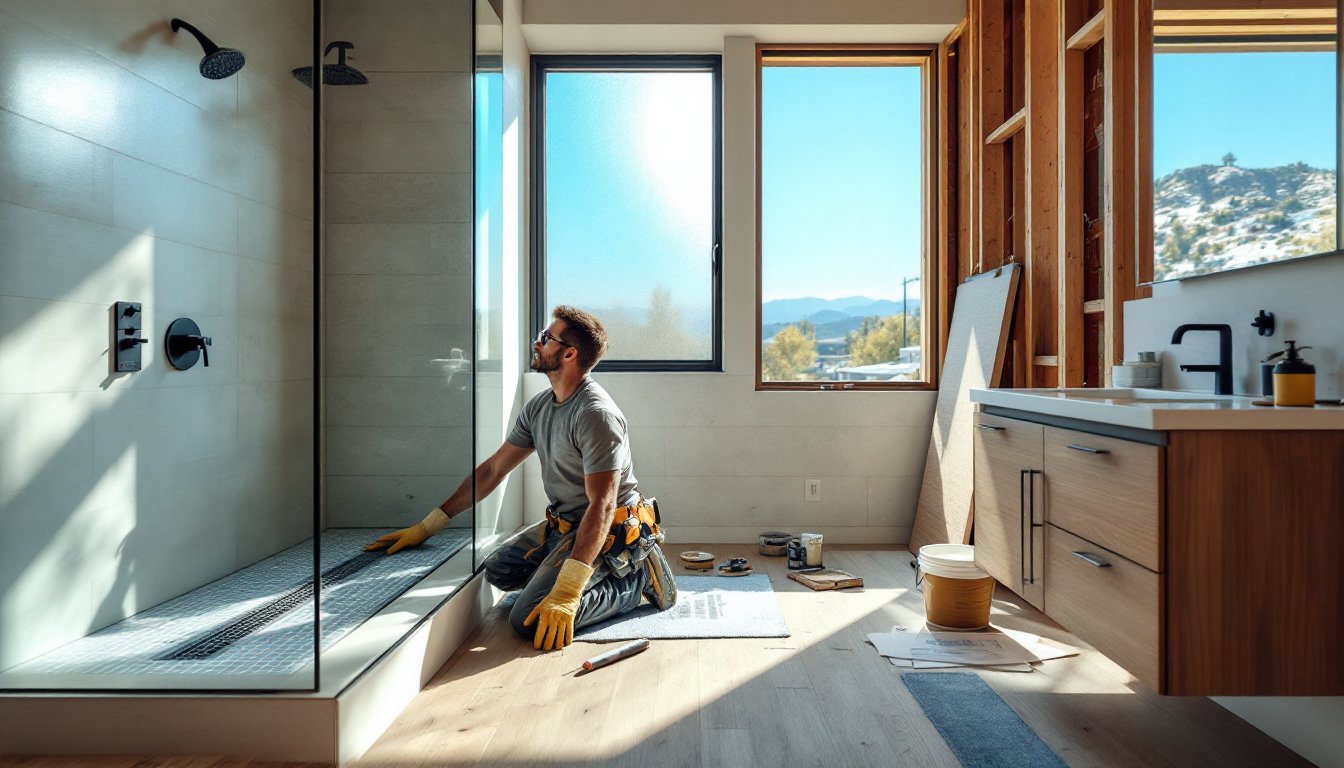
- Walk-in shower: Removing a tub and building a curbless or low-threshold shower with a linear drain. Expect $3,000–$7,000 for tile, waterproofing membrane (like Schluter KERDI), glass enclosure, and labor.
- Radiant floor heating: Electric mat systems cost $10–$15 per square foot installed. They’re a smart add in Denver’s cold months and pair well with tile or luxury vinyl plank.
- Custom vanity: Solid wood or plywood cabinets with soft-close drawers and a quartz or granite top run $1,500–$4,000 depending on size and finish.
- Lighting and ventilation: Recessed LED cans, a lighted mirror, and a Panasonic WhisperCeiling fan (110–130 CFM for a standard bath) add $800–$1,500 installed.
Luxury jobs might bring in a designer, spec European fixtures, use natural stone or large-format porcelain slabs, and incorporate smart mirrors or steam showers. For these, working with experienced bathroom remodel contractors in Denver ensures code compliance and quality craftsmanship.
Top Bathroom Design Trends in Denver for 2026
Design trends in Denver blend modern minimalism with warm, livable finishes, less sterile white-on-white, more texture and natural materials. Here’s what’s showing up in Denver bathroom remodel projects right now:
Matte black and brushed brass fixtures. Chrome is still around, but matte black faucets, showerheads, and cabinet pulls add contrast without feeling dated. Brushed brass or champagne bronze bring warmth and pair well with white or gray tile.
Large-format tile and slab walls. 12″×24″ or 24″×48″ porcelain planks reduce grout lines and speed installation. For shower walls, some contractors are using porcelain slabs (up to 5’×10′) that mimic marble or concrete with minimal seams.
Curbless and barrier-free showers. Aging-in-place design is mainstream. A curbless shower with a linear drain, grab bars, and a built-in bench works for all ages and makes the room feel larger. Building codes require specific slope and waterproofing details, so this isn’t a DIY weekend project.
Floating vanities. Wall-mounted cabinets create a clean, modern look and make floor cleaning easier. They do require solid blocking behind the drywall, typically 2×6 or 2×8 framing anchored to studs, so plan this during framing if you’re doing a full gut.
Natural and textured materials. Wood-look tile, concrete-look porcelain, and natural stone accents (like a pebble shower floor or marble feature wall) add warmth. Pair these with matte white or light gray walls to avoid a busy look.
Improved lighting. Layered lighting, recessed cans, sconces flanking the mirror, and under-cabinet or toe-kick LEDs, improves function and ambiance. Dimmers and color-temperature-adjustable LEDs are popular upgrades.
Water efficiency. WaterSense-labeled fixtures (toilets using 1.28 gallons per flush, showerheads at 2.0 GPM or less) are required by Denver’s plumbing code and help lower utility bills in a region where water costs are climbing.
How to Choose the Right Bathroom Remodeling Contractor in Denver
A bathroom remodel in Denver is only as good as the contractor executing it. Denver’s labor market is competitive, so good contractors book out weeks or months in advance. Here’s how to vet and hire the right one.
Check licensing and insurance. Colorado doesn’t require a state-level general contractor license, but many municipalities do. Denver requires contractors to register with the city and carry liability insurance. Ask for proof of both, plus workers’ comp if they have employees.
Look for bathroom-specific experience. A framer who builds decks might not know how to properly slope a shower pan or install a waterproofing membrane. Ask to see photos of completed bathrooms, specifically tile work, shower enclosures, and finish details.
Get at least three bids. Each should itemize labor, materials, permits, and timeline. Be wary of bids that lump everything into one line item or come in significantly lower than others, it often means corners will be cut or change orders will pile up.
Ask about subcontractors. Most general contractors sub out plumbing, electrical, and tile. Ask who they use and whether those subs are licensed. A good GC manages the schedule and quality control, but you want to know who’s actually doing the work.
Verify references and reviews. Call two or three recent clients and ask about communication, cleanliness, timeline adherence, and how the contractor handled problems. Online reviews on platforms like Angi can also highlight patterns, good or bad.
Understand the payment schedule. Typical terms are a deposit (10–20% to secure the schedule and order materials), progress payments tied to milestones (framing inspection, rough-in inspection, tile complete), and a final payment upon completion. Never pay the full amount upfront.
Get everything in writing. The contract should specify scope of work, materials (brand, model, color), start and estimated completion dates, payment schedule, and who pulls permits. If something’s not in the contract, assume it’s not included.
Navigating Denver Permits and Building Codes
Most shower remodel Denver projects that involve plumbing, electrical, or structural changes require a permit from Denver’s Community Planning and Development department. Skipping permits can lead to fines, failed inspections at resale, and liability if something goes wrong.
When you need a permit:
- Moving or adding plumbing fixtures (toilet, sink, shower)
- Relocating or adding electrical circuits, outlets, or lighting
- Removing or altering walls, especially if load-bearing
- Installing or modifying ventilation (required for bathrooms per IRC Section M1507)
When you might not need a permit:
- Replacing a toilet, vanity, or faucet in the same location
- Repainting or re-tiling surfaces without changing layout
- Swapping light fixtures on existing circuits
Always check with the city before starting work. If you’re unsure, a quick call to Denver’s permit office or a licensed contractor can clarify.
Key code requirements:
- GFCI protection required on all bathroom receptacles (NEC 210.8)
- Ventilation: Bathrooms need either a window (at least 3 square feet, half operable) or a mechanical exhaust fan vented to the exterior. Fans must provide at least 50 CFM for bathrooms up to 100 square feet.
- Shower pan slope: 1/4″ per foot toward the drain. Waterproofing membrane (like Schluter, Wedi, or RedGard) must extend at least 6″ above the tallest shower fixture.
- Grab bar blocking: If installing grab bars (required for accessible showers), backing must support 250 pounds of force. Use 2×6 or 2×8 blocking anchored to studs.
Inspection timeline: After the permit is issued, you’ll typically need inspections at rough-in (framing, plumbing, electrical before drywall) and final (all finishes complete). Schedule these through Denver’s online portal: inspectors usually come within 1–2 business days.
Most reputable contractors handle permits and scheduling. If you’re DIYing, budget extra time for plan review (1–2 weeks) and inspections. Resources like ImproveNet offer cost guides and project planning tools to help estimate timelines and budgets before you commit.