
Table of Contents
ToggleAir purifiers have shifted from niche appliances to household essentials, especially for anyone dealing with allergies, pet dander, or stale air in tightly sealed modern homes. The Shark Air Purifier 4, released in 2024 and still relevant in 2026, promises heavy-duty filtration without the premium price tag of Dyson or Blueair units. But does it actually clean the air effectively, or is it just another plastic box with a fan inside? This review digs into real-world performance, filter costs, and whether this model makes sense for your specific living space.
Key Takeaways
- The Shark Air Purifier 4 features a six-fan filtration system with HEPA and activated carbon filters that captures 99.98% of particles as small as 0.3 microns, making it effective for allergies, pet dander, and odors.
- This air purifier performs optimally in spaces between 500 to 700 square feet with Clean Sense IQ technology that automatically adjusts fan speed based on real-time air quality monitoring.
- Filter replacement costs range from $60 to $70 every 6 to 12 months depending on usage, while the unit consumes only 35 to 70 watts and costs approximately $3 to $5 monthly to operate.
- The Shark Air Purifier 4 operates at 30 decibels on low speed and up to 55 decibels on high, making it quiet enough for bedrooms while remaining effective for households with pets and high-traffic areas.
- With a five-year warranty and smart home integration via Alexa and Google Assistant, this model combines practical automation with long-term reliability at a mid-range price point.
What Makes the Shark Air Purifier 4 Stand Out
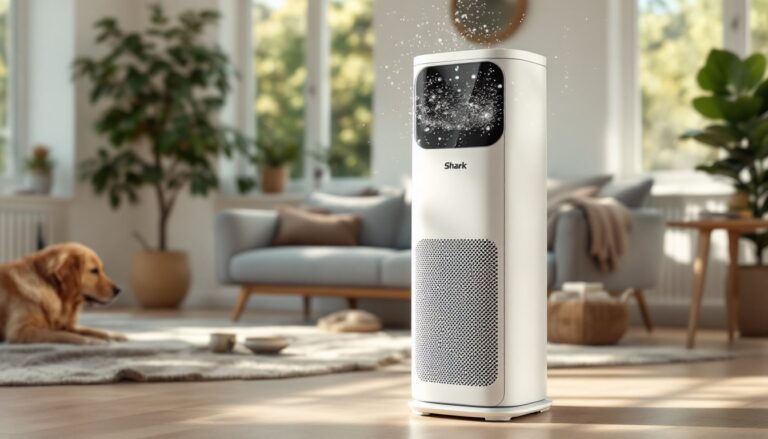
Shark built its reputation on vacuums, and the Air Purifier 4 carries over the same no-nonsense engineering. Unlike budget models that use single-stage filters or ozone generators (avoid those, they’re harmful indoors), this unit features a six-fan system that pulls air through multiple stages of filtration. That’s unusual at this price point.
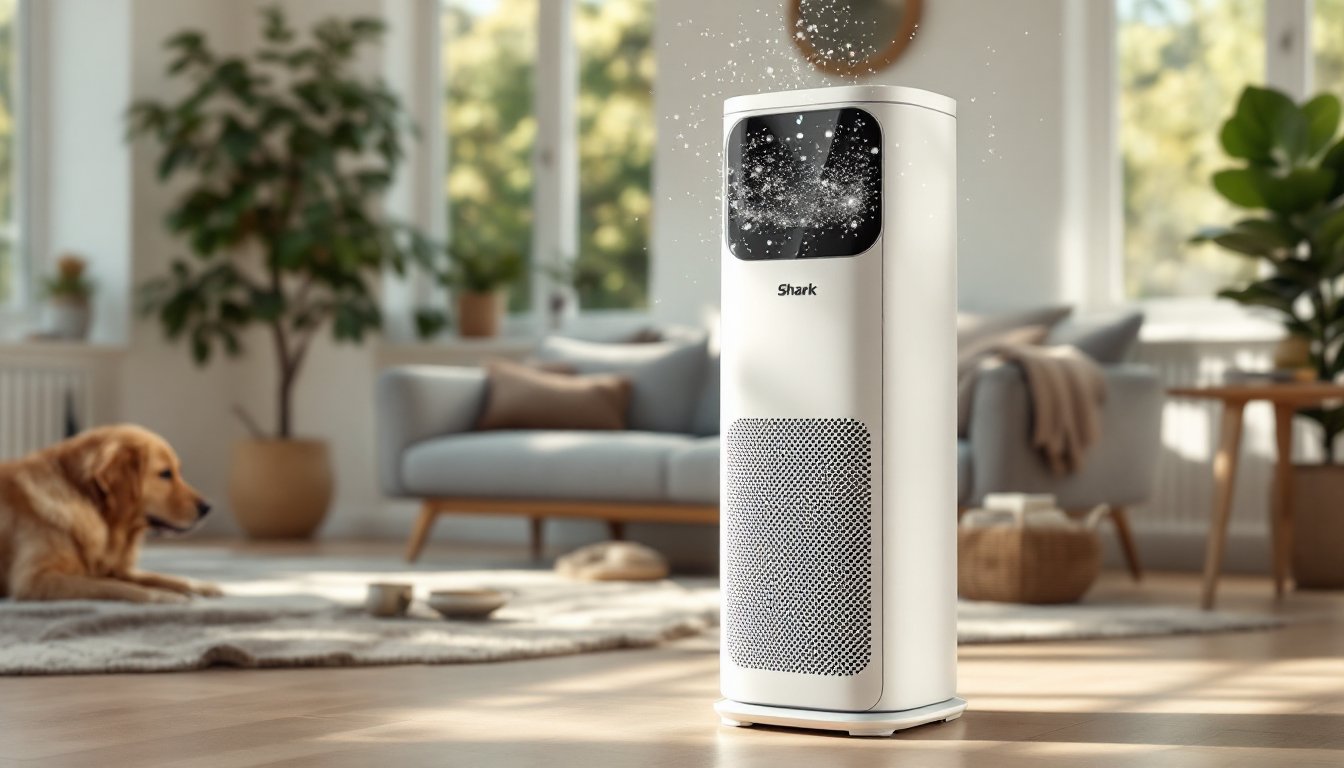
The design is compact but not flimsy. It’s about 24 inches tall and weighs roughly 18 pounds, so it’s portable enough to move between rooms but stable enough that it won’t tip over if you’ve got kids or pets bumping around. The control panel sits on top with tactile buttons, no finicky touch sensors that stop working after a year.
What separates this from generic options is the Clean Sense IQ technology. It’s not just marketing jargon. The built-in sensor continuously monitors air quality and auto-adjusts fan speed based on particle detection. When cooking with high heat or someone tracks in pollen, the unit ramps up without you touching it. That automation matters if you’re not the type to constantly fiddle with settings.
Another practical touch: the filter replacement indicator is based on actual runtime and air quality, not a generic timer. You’re not replacing filters prematurely or running a clogged one too long.
Key Features and Specifications
Filtration System and Air Quality Performance
The Shark Air Purifier 4 uses a HEPA filter rated to capture 99.98% of particles down to 0.3 microns. That includes pollen, dust mites, mold spores, and most airborne bacteria. It’s not a true medical-grade HEPA 13 or 14, but for residential use, it’s more than adequate.
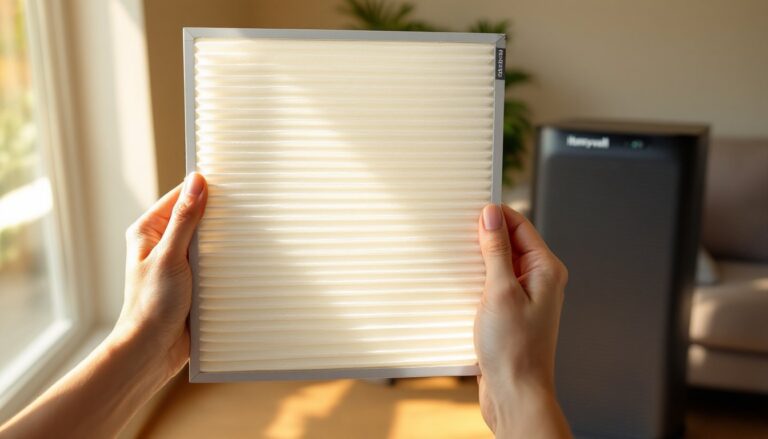
Ahead of the HEPA stage is a pre-filter that catches larger debris, pet hair, lint, dust clumps. This extends the life of the main filter, which is a cost-saver. Behind the HEPA layer is an activated carbon filter for odors and volatile organic compounds (VOCs). If you’re dealing with cooking smells, litter boxes, or off-gassing from new furniture, the carbon layer handles it better than HEPA alone.
Testing from lab evaluations on smoke and allergen removal showed the unit effectively cleared fine particulates in controlled environments. In a 500-square-foot room, it cycled the air about four times per hour on high speed, which meets the recommended air changes per hour (ACH) for allergy sufferers.
One limitation: it doesn’t have a UV-C light or ionizer. Some competitors include these, but they add cost and require additional maintenance. Shark kept it simple, which also means fewer parts to fail.
Coverage Area and Room Size Recommendations
Shark rates this model for rooms up to 1,000 square feet, but that’s under ideal conditions, open floor plan, standard 8-foot ceilings, minimal obstructions. In real-world use, it performs best in spaces 500 to 700 square feet. Think a master bedroom, large living room, or open-concept kitchen-dining area.
If your room is larger than 700 square feet, you’ll want to run it on higher speeds more often, which increases noise and energy use. For spaces over 1,000 square feet, consider running two units or stepping up to a commercial-grade model.
Ceiling height matters. If you’ve got vaulted ceilings or a loft-style room, the effective coverage drops because there’s more air volume to process. A room that’s 600 square feet with 10-foot ceilings has roughly 6,000 cubic feet of air, versus 4,800 cubic feet at standard height. Plan accordingly.
For smaller rooms, home offices, nurseries, guest bedrooms under 300 square feet, this unit is overkill. You’d be better off with a compact model that uses less power and takes up less floor space.
Real-World Performance in Different Home Environments
In a household with two dogs and hardwood floors, the Shark Air Purifier 4 made a noticeable difference within 48 hours. Dust accumulation on surfaces slowed, and the stale smell that builds up in winter when windows stay closed diminished. The pre-filter collected a surprising amount of fur in the first week, expect to vacuum it off every two weeks if you’ve got shedding pets.
For allergy sufferers, performance during high pollen seasons showed measurable improvement in morning congestion and nighttime breathing. Placing the unit in the bedroom and running it on Auto mode overnight kept particulate levels low without excessive noise. On the lowest speed, it hums at around 30 decibels, quieter than a refrigerator. High speed pushes it to 55 decibels, which is noticeable but not disruptive if you run a fan or white noise machine.
In a cooking-heavy kitchen setup, the carbon filter handled fried food odors and grease smoke reasonably well, though it’s not a substitute for a range hood. If you’re searing steaks or stir-frying on high heat, crack a window and run exhaust ventilation. The purifier works as a secondary cleanup tool, not the primary line of defense.
One user reported running the unit in a basement workshop where sawdust and finishing fumes are common. It kept the air breathable during staining projects, though the filter needed replacement after about four months instead of the typical six. If you’re using it in a high-particulate environment, budget for more frequent maintenance.
The app connectivity is optional but useful. You can check air quality history, adjust speeds remotely, and get filter life updates. It connects via Wi-Fi and integrates with Alexa and Google Assistant for voice control. Setup took about five minutes, scan a QR code, connect to your network, done. No subscription fees or paywalled features.
Setup, Maintenance, and Long-Term Costs
Out of the box, setup is straightforward. Remove the plastic wrapping from the filters (people forget this step more than you’d think), slide the filter cartridge into the base, plug it in. No tools required. The user manual is clear and includes diagrams, which helps if you’re not tech-inclined.
Filter replacement is the main ongoing cost. Shark sells a combined HEPA and carbon filter pack for around $60 to $70, depending on retailer and sales. Expect to replace it every six to twelve months, depending on usage and air quality. If you run it 24/7 in a high-traffic room, lean toward the six-month mark. Light use in a cleaner environment can stretch it closer to a year.
The pre-filter is washable and reusable. Rinse it under a faucet every month, let it air dry completely, and reinstall. Don’t skip this, clogged pre-filters reduce airflow and force the HEPA to work harder.
Energy consumption is modest. The unit pulls about 35 watts on low speed and 70 watts on high. Running it continuously on Auto mode costs roughly $3 to $5 per month in most U.S. regions, assuming $0.13 per kWh. That’s less than leaving a ceiling fan on.
Noise levels are manageable for most settings. According to detailed testing on fan speeds and sound output, the lowest setting is bedroom-friendly, while the highest is comparable to a bathroom exhaust fan. If you’re sensitive to white noise, you’ll notice it, but it won’t drown out conversation or TV audio.
Warranty is five years, which is above average for this category. Most competitors offer one to three years. Register the product online within 30 days to activate the full coverage. Keep your receipt, Shark’s customer service will ask for proof of purchase if you need a replacement part.
One minor annoyance: the power cord is only about 5.5 feet long. If your outlet placement is awkward, you might need an extension cord. Use a 14-gauge or thicker cord rated for the wattage to avoid voltage drop or overheating.
Conclusion
The Shark Air Purifier 4 delivers solid performance for households dealing with allergies, pets, or general air quality concerns. It’s not the quietest or the cheapest to maintain, but the six-fan system, automated sensing, and five-year warranty make it a practical choice for medium to large rooms. If your space falls in the 500 to 700-square-foot range and you want a set-it-and-forget-it solution, this model earns its spot.