
Table of Contents
ToggleTexas homeowners face unique cleaning challenges, from stubborn caliche dust coating driveways to mildew creeping across siding in Houston’s humidity. A pressure washer isn’t just a nice-to-have here: it’s essential equipment for maintaining curb appeal and protecting your investment. But walking into a pressure washing store without knowing what you need is like shopping for a truck based on color alone. The right store offers more than equipment on shelves, it provides the expertise, parts availability, and ongoing support that turn a weekend warrior into a confident operator. This guide walks through exactly what to look for, what to expect, and how to make a smart purchase that’ll last years.
Key Takeaways
- A specialized Texas pressure washing store offers commercial-grade equipment, on-site parts inventory, and expert service support that big-box retailers can’t match, saving time and money when repairs are needed.
- Choose gas-powered units rated 2,500–3,200 PSI with triplex plunger pumps and Honda or Kohler engines for most residential projects—they balance power, durability, and parts availability across Texas.
- Quality staff at a dedicated pressure washing store should ask about your specific project scope and educate you on key specs like GPM (flow rate), nozzle angles, and safety practices before making a purchase recommendation.
- Budget $400–$800 for a mid-range gas pressure washer, plus $150–$300 for essential accessories like surface cleaners, replacement nozzles, and safety gear to achieve professional results.
- Proper maintenance—flushing after each use, changing oil every 50 hours, and winterizing with pump antifreeze in Texas—extends your equipment lifespan and prevents costly pump failures.
- Always prioritize safety by wearing eye protection and closed-toe boots, never pointing the spray at people or animals, and testing pressure patterns away from surfaces before cleaning to avoid serious water injection injuries.
Why Choosing the Right Pressure Washing Store Matters for Texas Homeowners
Texas weather puts equipment through its paces. Summer heat above 100°F, sudden storms, and high mineral content in water all affect how pressure washers perform and how long they last. A big-box retailer might stock a few consumer-grade models, but a dedicated pressure washing store carries commercial units built for repeated use, replacement nozzles rated for different PSI levels, and staff who understand the difference between a surface cleaner and a rotary turbo nozzle.
Buying from a specialized store also means access to parts when something breaks. Consumer models often use proprietary components that require shipping from a warehouse. Professional stores stock O-rings, unloader valves, pump seals, and hoses on-site. When your pump fails mid-job on a Saturday, that difference matters.
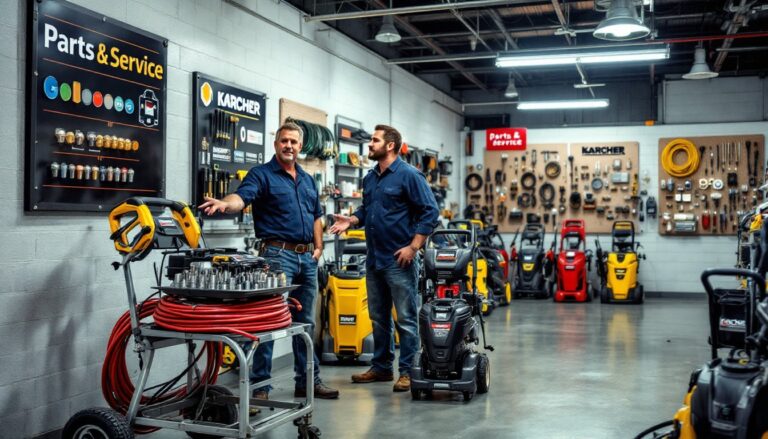
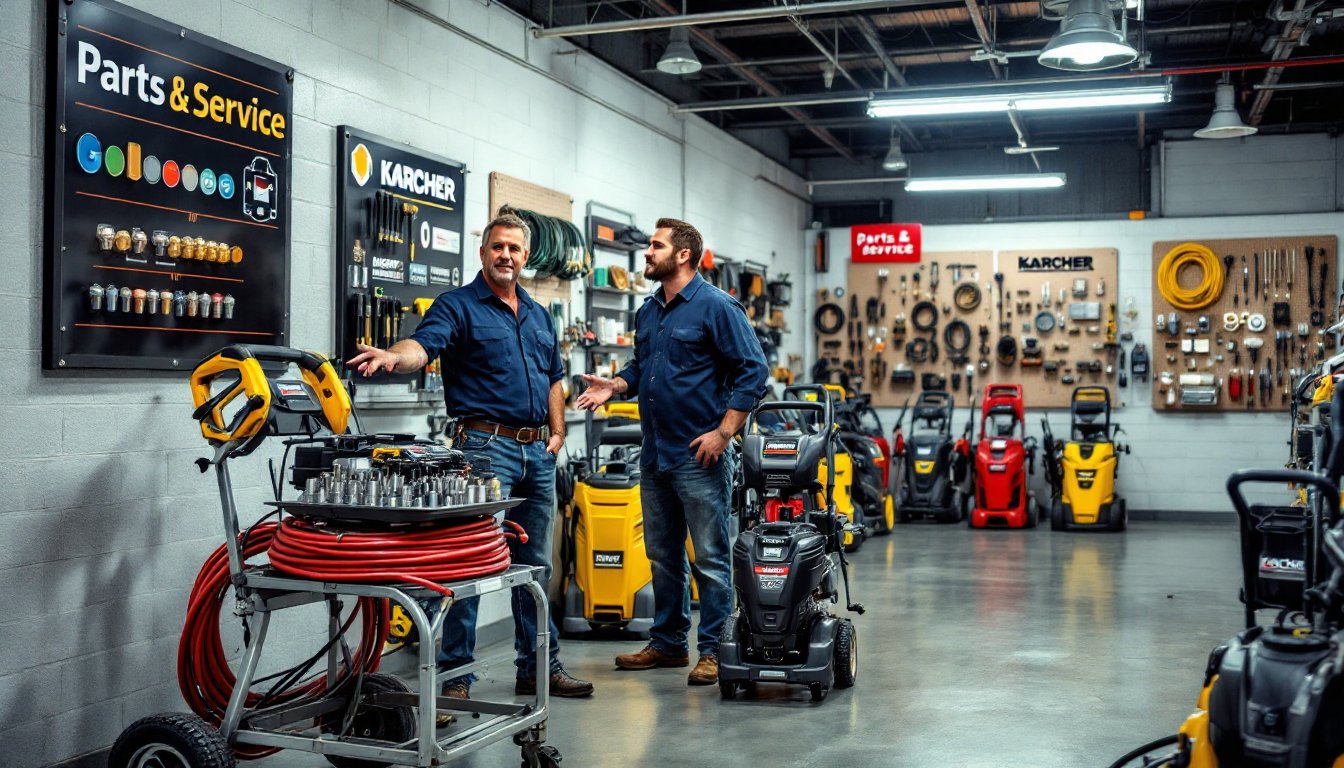
Warranty and repair services separate good stores from mediocre ones. Many carry brands like Simpson, Karcher, or BE Pressure with service networks across Texas. They can handle warranty claims, annual maintenance, and troubleshooting without forcing you to deal with a manufacturer’s customer service line. For homeowners tackling large properties or side businesses doing neighbor jobs, that support is worth the slightly higher upfront cost compared to online-only retailers.
What to Look for When Shopping at a Texas Pressure Washing Store
Equipment Quality and Brand Selection
A legitimate pressure washing store stocks multiple tiers: entry-level electric units for deck cleaning, mid-range gas models for driveways and fences, and commercial-grade machines for contractors. Look for stores carrying 2,000–4,000 PSI gas units with 2.5–4.0 GPM (gallons per minute) flow rates, that range handles most residential tasks without wasting water or fuel.
Pay attention to pump type. Axial cam pumps cost less but wear faster under heavy use. Triplex plunger pumps run cooler, last longer, and handle detergents better, they’re standard on commercial units and worth the investment if you’re cleaning more than twice a month. Ask if the store carries replacement pumps for the brands they sell: if they stock them, it signals they understand longevity matters.
Engine brand also counts. Honda GX-series engines dominate the professional market for reliability, but Kohler and Briggs & Stratton commercial engines perform well too. Avoid no-name engines on discounted units, they’ll frustrate you with hard starts and vapor lock in Texas heat.
Expert Staff and Customer Support
Salespeople at dedicated stores should ask about your project scope before recommending a unit. Are you cleaning 150 square feet of patio or 3,000 square feet of driveway? Do you need hot water capability for grease removal, or will cold water with degreaser handle it? A good store employee knows that homeowner project planning often starts with understanding GPM as much as PSI, flow rate determines cleaning speed more than pressure alone.
Test their knowledge with specific questions: “What nozzle degree do I use on wood siding?” (Answer: 25° or 40° to avoid gouging). “Can I run this unit with well water?” (Depends on sediment levels and whether the pump has inlet filtration). If staff can’t answer or just push the most expensive model, shop elsewhere.
After-sale support matters as much as the initial purchase. Ask if they offer equipment demos, annual tune-up services, or loaner units during repairs. Some Texas stores even provide free first-time user walkthroughs, they’ll show you how to prime the pump, adjust unloader pressure, and swap nozzles safely. That 20-minute lesson prevents expensive mistakes like running the pump dry or using a 0° nozzle on painted surfaces.
Top Equipment Options Available at Texas Pressure Washing Stores
Most Texas stores stock three categories. Electric pressure washers (1,300–2,000 PSI) work for cars, patio furniture, and small decks. They’re quieter and need less maintenance, but you’re tethered to an outlet and limited on power. Brands like Sun Joe and Greenworks dominate this segment, fine for light duty, not for oil stains or heavy mildew.
Gas-powered residential units (2,500–3,200 PSI, 2.5–3.0 GPM) handle driveways, fences, siding, and most homeowner tasks. Look for models with horizontal shaft engines (smoother operation) and thermal relief valves to prevent overheating. Simpson MSH3125 and Generac SpeedWash are common at Texas stores: both use quality pumps and have parts availability statewide.
Commercial-grade machines (3,500–4,000 PSI, 4.0+ GPM) are overkill for occasional use but necessary for regular heavy cleaning or side income work. These units often feature belt-drive pumps (quieter, cooler running) and larger fuel tanks (6–8 gallons). They’re built for 20+ hours per week. Brands like BE Pressure, Mi-T-M, and Landa fall into this range. Many stores also carry hot water trailer units for commercial operators needing to strip grease or gum, expect to spend $4,000–$8,000 on those.
Accessories separate adequate cleaning from professional results. Surface cleaners (rotating bar attachments) prevent streaking on flat surfaces and cut driveway cleaning time by 75%. Extension wands let you reach second-story siding without a ladder. Chemical injectors and downstream injectors apply detergent differently, ask which your unit supports. Stores should stock multiple nozzle tips (0°, 15°, 25°, 40°, soap) and explain when to use each. A 0° nozzle concentrates 3,000 PSI into a pinpoint, it’ll strip paint, etch concrete, and punch through skin. Always start wider and work down.
How to Budget for Your Pressure Washing Equipment Purchase
Entry-level electric units start around $150–$300. They’re fine for apartment patios or annual deck cleaning, but don’t expect multi-year durability under Texas sun. Mid-range gas models run $400–$800 and represent the sweet spot for most homeowners, enough power for major projects, reasonable longevity with maintenance, and parts availability.
Commercial units jump to $1,200–$3,000 depending on features. That’s a tough sell for once-a-month use, but if you’re cleaning your property plus helping neighbors or running a side business, the cost-per-hour drops fast. Some stores offer financing or rent-to-own programs, useful if you need the tool now but want to spread the cost.
Don’t forget accessories in your budget. A decent surface cleaner adds $80–$250. Replacement nozzles run $10–$30 each. Chemical-resistant hoses (50 feet) cost $40–$100. Safety goggles, chemical-resistant gloves, and hearing protection are non-negotiable PPE, budget another $50. For comprehensive home improvement project budgets, factor in cleaning solutions, pump oil, and fuel stabilizer for off-season storage.
Maintenance costs vary by use. Plan on $50–$100/year for pump oil changes, spark plug replacement, and inlet screen cleaning if you run the unit monthly. Skipping maintenance turns a $600 machine into a $200 parts donor within two seasons. Ask the store about service packages, some include annual tune-ups at discounted rates for equipment purchased there.
Maintaining Your Pressure Washer: Parts, Accessories, and Services
Pumps fail most often, usually from running dry, using dirty water, or freezing. Always flush the pump with clean water after each use, especially if you ran detergent through it. In winter, add pump antifreeze or run RV antifreeze through the system, Texas does freeze, and a cracked pump costs $150–$400 to replace.
Engine maintenance follows standard small-engine rules: change oil after the first 5 hours, then every 50 hours or annually. Use SAE 30 or 10W-30 non-detergent oil for most pumps. Check the air filter monthly if you’re working in dusty conditions (common around new construction or during drought). Keep fresh fuel with stabilizer: ethanol-blend gas gums up carburetors fast in equipment that sits between uses.
A good Texas pressure washing store stocks common wear parts: O-rings (rebuild kits run $15–$40), unloader valves ($30–$80), inlet/outlet manifolds, and thermal relief valves. They should also carry nozzles, quick-connect fittings, hose repair kits, and replacement wands. If the store only sells complete units with no parts inventory, you’ll end up ordering online and waiting days when something breaks mid-project.
Some stores offer repair services in-house or partner with small-engine shops nearby. Ask about turnaround time and labor rates ($60–$100/hour is typical). For commercial users, professional pressure washing services can provide insights into which models hold up under daily use and which parts fail most often, worth asking about if you’re deciding between brands.
Safety reminder: Never point a pressure washer at yourself, others, or animals. Always wear eye protection and closed-toe boots. The high-pressure stream can inject water or chemicals under skin, causing serious injury. Test spray patterns away from surfaces before starting, and never use a pressure washer on a ladder, the kickback can throw you off balance.