
Table of Contents
ToggleThe average American living room has shrunk by 8% over the last two decades, yet we’re asking more from our furniture than ever. A convertible sectional sofa bridges that gap, offering full-size seating, guest sleeping space, and reconfigurable layouts without sacrificing square footage. Unlike traditional sofas that lock you into one arrangement, these modular pieces adapt as your needs change. Whether you’re hosting overnight guests, rearranging for movie night, or converting a corner into a reading nook, a well-chosen convertible sectional does the heavy lifting.
Key Takeaways
- A convertible sectional sofa solves three problems at once—seating capacity, guest accommodation, and layout flexibility—while costing 40–50% less than buying a separate sofa and guest bed.
- Convertible sectional sofas with pull-out sleepers or click-clack mechanisms adapt to different living situations, from small apartments to growing families, extending the furniture’s useful life through multiple home configurations.
- When choosing a convertible sectional, verify doorway and hallway clearance for shipping boxes, measure your room to scale accounting for 30–36 inches of traffic flow, and test pull-out mechanisms in-store to ensure durability.
- Upholstery rated 30,000+ double rubs (abrasion test) and kiln-dried hardwood frames with corner blocks provide durability for homes with kids or pets, while performance fabrics handle spills and pet hair better than untreated natural fibers.
- Regular maintenance—vacuuming weekly, rotating cushions every 3–4 months, and tightening hardware semi-annually—prevents premature wear and keeps pull-out sleeper mechanisms functioning smoothly for years.
- A convertible sectional with storage compartments adds 8–15 cubic feet of hidden space for blankets and linens, while wall-hugging designs requiring only 4 inches of clearance let you maximize floor space in rooms under 1,200 square feet.
What Is a Convertible Sectional Sofa?
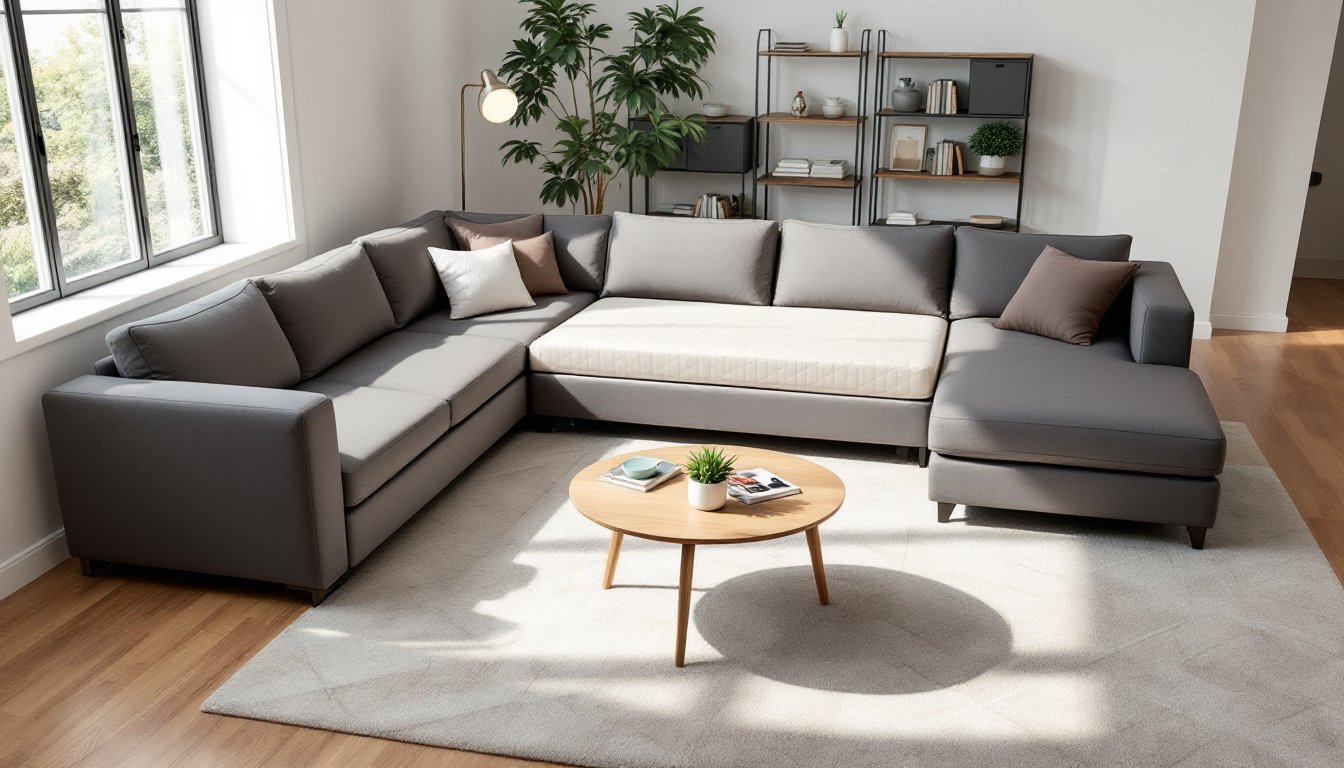
A convertible sectional sofa combines modular seating with one or more transformation features, typically a pull-out sleeper, adjustable backrests, or reconfigurable modules that detach and rearrange. The “sectional” part refers to its multi-piece construction: left and right arms, armless center seats, corner wedges, and chaise lounges that connect via brackets, clips, or hook-and-loop fasteners.
The “convertible” aspect varies by design. Some models hide a queen-size pull-out mattress under the seat cushions, while others feature backrests that fold flat to create a daybed-style sleeping surface. A third category uses freestanding modules you can arrange into an L-shape, U-shape, or separate into standalone chairs and loveseats.
Most frames are built from kiln-dried hardwood (often birch or eucalyptus) or engineered wood with corner blocks and metal brackets for structural integrity. Seat cushions typically use high-density foam (1.8–2.5 lb/ft³ density) or pocket coils, while pull-out mattresses range from 4-inch memory foam to full innerspring units. Weight capacities for sleeping surfaces generally max out around 600–750 pounds, so check manufacturer specs if durability is a priority.
Key Benefits of Choosing a Convertible Sectional
Convertible sectionals solve three problems at once: seating capacity, guest accommodation, and layout flexibility. A standard 84-inch three-seat sofa seats three adults comfortably: a five-piece convertible sectional in the same footprint can seat six to eight and sleep two overnight guests.
Cost efficiency plays a role, too. Buying a quality sofa and a separate guest bed runs $1,200–$3,000+: a mid-range convertible sectional with a built-in sleeper typically costs $800–$2,200, depending on upholstery and frame quality. You’re consolidating two furniture purchases into one.
Flexibility matters in real-world living. Rearrange modules to open up floor space for kids’ playtime, shift the chaise to the opposite side after moving, or break the sectional into two smaller sofas when downsizing. That adaptability extends the furniture’s useful life through multiple living situations.
Space-Saving Solutions for Modern Homes
In homes under 1,200 square feet, every piece of furniture needs to earn its footprint. Convertible sectionals with storage compartments under the chaise or seat cushions add 8–15 cubic feet of hidden space for blankets, pillows, or off-season linens.
Wall-hugging designs with zero-clearance recliners (requiring as little as 4 inches from the wall) let you push the sectional flush against walls without blocking reclining mechanisms. This design works especially well in narrow rooms where a traditional reclining sofa would dominate the center of the floor.
For studio apartments or open-concept spaces, convertible sectional sofas double as room dividers. Place the back of a sectional perpendicular to a wall to visually separate the sleeping area from the living zone without building permanent walls.
Types of Convertible Sectional Sofas to Consider
Pull-out sleeper sectionals use a metal or wood frame that slides out from under the seat cushions, unfolding a mattress that rests on the floor or a support platform. These work best in rooms with at least 10 feet of clearance in front of the sofa to fully extend the bed. Mattress thickness ranges from 4 inches (acceptable for occasional use) to 6+ inches for regular guests.
Click-clack or futon-style sectionals feature backrests that recline flat or fold down to meet the seat, creating a continuous sleeping surface without a separate mattress. They’re simpler mechanically and lighter (important if you rearrange frequently), but the sleeping surface is firmer and less forgiving than a dedicated mattress.
Modular sectionals with reversible chaises let you swap the chaise from left to right without tools. Pieces connect via metal clips or interlocking brackets. Some advanced models include power recliners with USB charging ports, adding functionality for daily use. Expect to pay 20–30% more for power features and verify your layout places modules within reach of outlets.
Storage sectionals incorporate lift-top compartments under chaises or center seats. Hydraulic hinges make accessing storage easy, but they add 15–25 pounds per module, so factor that in if you plan to move pieces often. When evaluating photo ideas and design layouts, pay attention to hinge placement and clearance requirements for lift-top storage.
How to Choose the Right Convertible Sectional for Your Space
Start by measuring your room’s usable floor space, not just wall length. Account for 30–36 inches of clearance around the sectional for traffic flow. Sketch your room to scale on graph paper (¼ inch = 1 foot works well) and mark door swings, windows, radiators, and outlets.
Measure doorways, stairwells, and hallways leading to the room. Most sectional pieces ship in boxes with dimensions listed in the product specs, verify the largest box will clear your tightest passage. Leg height matters too: many sectionals have 4–6 inch removable legs to reduce shipping height, but you’ll need clearance to tilt and maneuver.
Evaluate your sleeper needs honestly. If guests stay fewer than 10 nights per year, a 4-inch gel memory foam pull-out suffices. For regular use (college-age kids coming home, frequent family visits), invest in a 5–6 inch innerspring or hybrid mattress. Test the pull-out mechanism in-store if possible, cheaper models use thin support bars that sag under weight.
Upholstery choice impacts durability and maintenance. Microfiber or performance fabrics (often polyester blends treated with stain resistance) handle spills and pet hair better than untreated linen or cotton. Leather and faux leather wipe clean easily but show scratches and wear in high-contact areas. For homes with kids or pets, look for fabrics rated 30,000+ double rubs (Martindale or Wyzenbeek abrasion tests).
Frame construction determines longevity. Kiln-dried hardwood frames with corner blocks and doweled joints outlast particleboard or softwood. Check the weight rating, a sectional rated for 1,000+ pounds total seating capacity indicates solid engineering.
Styling and Placement Tips for Maximum Functionality
Anchor the sectional perpendicular to the longest wall in rectangular rooms, creating an L-shape that defines the seating area without blocking sightlines. In square rooms, center the sectional with the chaise facing a focal point (TV, fireplace, or window).
Leave 12–18 inches between the sectional and a coffee table, enough to walk through comfortably but close enough to reach drinks without stretching. If your sectional includes a sleeper, skip the coffee table or choose one on casters that you can roll aside when deploying the bed.
Rug placement grounds the furniture visually. A rug should extend 6–12 inches beyond the front legs of the sectional on all occupied sides. For a five-piece sectional in an L-shape, an 8×10 or 9×12 rug typically works, depending on overall dimensions.
Balance the sectional’s visual weight with vertical elements. A tall bookshelf, floor lamp, or large artwork on the wall behind the sofa prevents the room from feeling bottom-heavy. Multi-functional designs favored by small-space decorating experts often pair sectionals with nesting tables or ottomans that provide extra seating without permanent floor commitment.
Use throw pillows strategically, two to three 18×18-inch or 20×20-inch pillows per seat section adds comfort without overwhelming the look. If your sectional has deep seats (30+ inches), add lumbar pillows to support lower backs during extended sitting.
Maintenance and Care for Long-Lasting Durability
Vacuum upholstery weekly using the brush attachment to remove dust, crumbs, and pet hair before they work into the weave. For fabric sectionals, treat spills immediately, blot (never rub) with a clean, white cloth and use cleaner recommended by the manufacturer. Most performance fabrics tolerate a mild soap-and-water solution (one teaspoon dish soap per cup of water), but test in an inconspicuous spot first.
Rotate and flip seat cushions every three to four months to distribute wear evenly. If your sectional has removable cushion covers, check the care tag, many are machine washable on cold/gentle cycle, though air drying prevents shrinkage.
Inspect and tighten connection hardware every six months. Clips, brackets, and interlocking tabs loosen with use, especially if you rearrange modules frequently. Keep a hex key or screwdriver sized to your sectional’s fasteners handy, most use 5mm hex bolts or Phillips-head screws.
For pull-out sleeper mechanisms, vacuum under the seat deck when the bed is deployed to clear dust and debris from the track. Spray metal-on-metal contact points with silicone-based lubricant (avoid WD-40, which attracts dirt) once or twice a year to keep the frame sliding smoothly.
Protect hardwood or metal legs from scratches by adding felt pads to the bottom. Replace pads annually or when they compress flat. If your sectional sits on hardwood floors, check that leveling feet are adjusted evenly to prevent rocking, which stresses joints and fasteners over time.
Safety note: Always follow manufacturer load limits for sleeper mattresses and reclining mechanisms. Exceeding weight ratings voids warranties and risks frame failure.