
Table of Contents
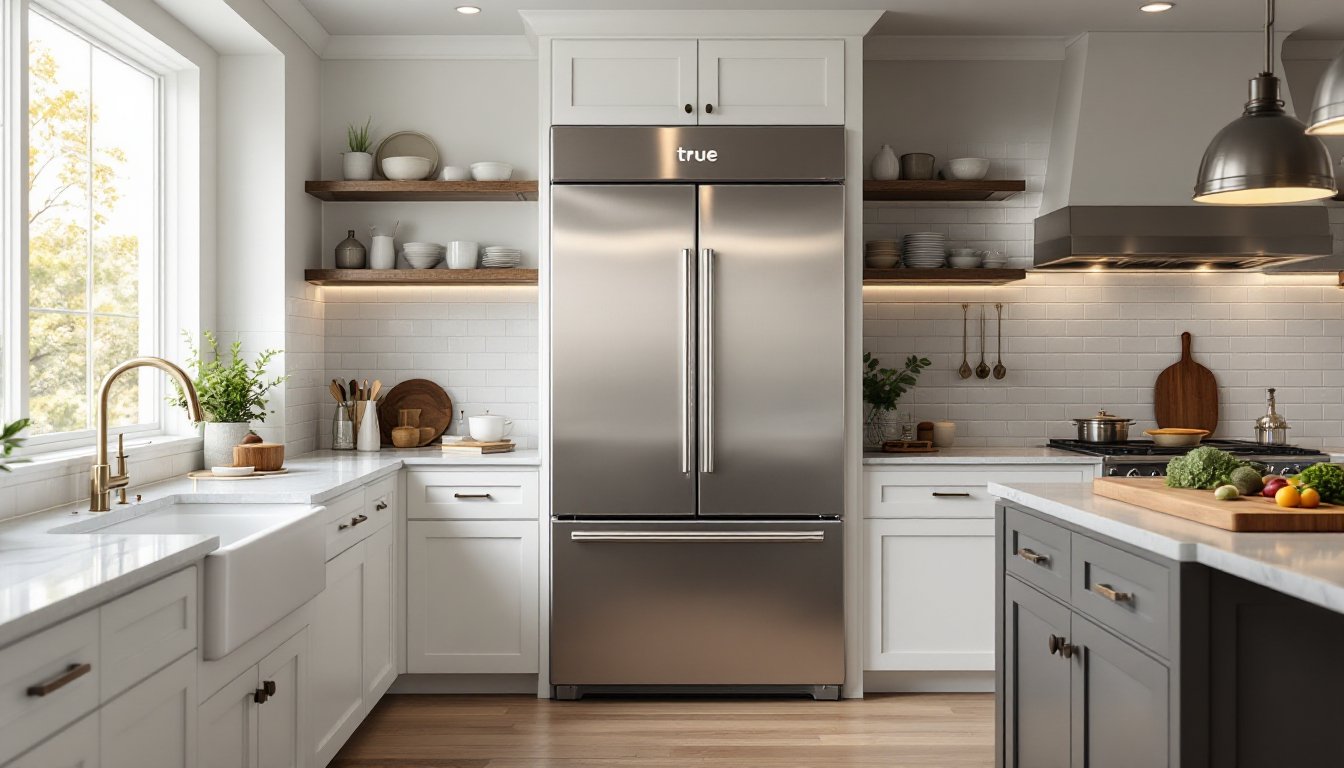
ToggleBringing professional-grade refrigeration into a residential kitchen sounds like overkill, until you’ve crammed holiday groceries into an underpowered fridge for the third year running. True commercial refrigerators, a brand synonymous with reliability in restaurant kitchens, have quietly become a favorite upgrade for serious home cooks, avid entertainers, and anyone who needs cold storage that actually keeps up. Unlike standard residential units, these workhorses deliver consistent temperatures, massive capacity, and construction designed to run 24/7. They’re not for everyone, but if your kitchen demands match your ambition, a True refrigerator might be the upgrade that makes sense.
Key Takeaways
- A True commercial refrigerator offers nearly double the capacity of standard residential units while maintaining precise temperature control within ±2°F, protecting perishables and extending shelf life.
- True commercial refrigerators are engineered for 15–20 years of continuous use with serviceable compressors and heavy-duty construction, making them more durable and cost-effective long-term than replacing residential models every decade.
- Installation requires dedicated electrical circuits (15–20 amp minimum), proper ventilation clearance of 3–6 inches on sides and back, and careful measurement for doorway and space accessibility to avoid costly installation failures.
- Energy consumption is higher than residential models, costing $300–$400 extra annually, but this is offset by eliminating the need for a second fridge and reducing food waste through superior storage capacity and temperature consistency.
- Quarterly condenser coil cleaning, monthly gasket inspections, proper leveling, and professional service every 18–24 months keep a True refrigerator running efficiently and protect your investment in this professional-grade appliance.
- Used and refurbished True commercial refrigerators provide significant savings ($1,200–$2,500) compared to new models ($3,500–$5,000), offering better ROI for homeowners who entertain frequently or practice bulk cooking.
What Is a True Commercial Refrigerator?
True Manufacturing is a U.S.-based company that’s been building commercial refrigeration since 1945, primarily for foodservice operations. Their units are engineered for high-volume use, maintaining precise temperatures even with frequent door openings and heavy loads.
Commercial refrigerators differ from residential models in several key ways. They use forced-air refrigeration systems with larger compressors and evaporator fans, ensuring consistent cooling across all shelves. Cabinet construction typically features stainless steel exteriors and aluminum interiors, both easier to sanitize than plastic. Door gaskets are thicker and magnetic seals more robust to maintain the cold chain.
True units are NSF-certified for foodservice, meaning they meet strict sanitation and performance standards. Temperature ranges hold steady between 33°F and 38°F for refrigeration (some models reach -10°F for freezing), critical for food safety in commercial settings but equally valuable at home.
Most True refrigerators come in reach-in configurations, single, double, or triple door models ranging from 23 cubic feet to over 72 cubic feet. Glass door models let you see inventory without opening, reducing temperature swings. Shelving is adjustable and heavy-duty, rated to hold full sheet pans and hotel pans without sagging.
Key Benefits of Installing a True Commercial Refrigerator at Home
Capacity is the obvious draw. A standard 36-inch residential fridge holds around 25 cubic feet: a True two-door reach-in offers 49 cubic feet in roughly the same footprint. You’re gaining shelf space equivalent to adding a second full-size fridge.
Temperature consistency matters more than most homeowners realize. Residential compressors cycle on and off, causing temperature swings of 5-7°F. True units maintain ±2°F variance, protecting perishables and extending shelf life. If you buy in bulk, preserve garden harvests, or age charcuterie, that precision pays off.
Durability separates commercial from residential gear. True refrigerators are built for 15-20 years of continuous use in demanding environments. Compressors are serviceable rather than sealed, door hinges are heavy-gauge stainless, and shelving won’t crack under a 40-pound turkey. You’re not replacing this unit in five years.
Better organization comes standard. Adjustable shelving accommodates full sheet pans (18″ x 26″), making it easier to store bulk items, prepped ingredients, or large platters without Tetris-level stacking. Many kitchen design ideas now incorporate commercial refrigeration as a functional focal point.
The resale factor shouldn’t be ignored. High-end kitchens command premium prices, and professional-grade appliances signal serious intent. A well-maintained True unit can add value in markets where gourmet kitchens are expected.
Popular True Refrigerator Models for Residential Use
The True T-Series reach-ins are the most common residential crossovers. The T-49 (two-door, 49 cu. ft.) and T-72 (three-door, 72 cu. ft.) fit standard commercial door widths but require careful measurement for home installation. Exteriors are stainless steel: interiors are white aluminum with adjustable PVC-coated wire shelving.
True GDM glass door merchandisers appeal to homeowners who want visibility without opening the door. The GDM-23 (23 cu. ft., single glass door) fits tighter spaces and works well as a beverage or backup fridge. LED interior lighting and self-closing doors are standard. Glass doors do sacrifice some insulation efficiency compared to solid doors.
True undercounter models like the TUC series integrate into custom cabinetry. These 27-inch-tall units slide under standard counters and come in widths from 27 to 60 inches. They’re ideal for islands or wet bars where a full reach-in won’t fit. Undercounter units often have front-breathing compressors, allowing flush installation.
For serious cold storage, the True TSeries freezers operate at -10°F and can handle bulk meat, whole-animal butchering projects, or long-term preservation. Freezer models pull more amperage and require dedicated circuits.
When comparing lab-tested commercial refrigerators, True consistently ranks for cooling efficiency and build quality. Specs matter: check BTU ratings, refrigerant type (most now use R290 propane, an eco-friendlier option), and whether the model is ENERGY STAR certified, some commercial units are not.
Installation Requirements and Space Considerations
Physical dimensions are non-negotiable. A True T-49 measures roughly 54 inches wide x 33 inches deep x 83 inches tall. Doorways, hallways, and the final location must accommodate those dimensions, plus clearance for door swing (doors open 120° on most models). Measure twice, demo the doorframe once.
Electrical requirements differ from residential fridges. Most True reach-ins run on 115V/60Hz but draw 8-12 amps at startup. You’ll need a dedicated 15-amp circuit minimum: larger models may require 20-amp service. GFCI protection is recommended if installed near sinks or wet areas. Extension cords are not an option, hardwire or use a heavy-duty plug rated for the load.
Ventilation is critical. Commercial compressors generate heat. True specifies 3-6 inches of clearance on sides and back for airflow. Enclosing a unit in a tight alcove without ventilation will overheat the compressor and void the warranty. If integrating into cabinetry, install ventilation grilles at top and bottom.
Floor load can surprise you. A fully stocked T-72 weighs over 800 pounds. Most residential floors handle this, but if installing on a second story or over a basement, confirm joist spacing and load capacity. Consider leveling feet or casters, True models come with adjustable legs. If you want mobility, locking casters are available but add height.
Plumbing isn’t needed unless you opt for an ice maker or automatic condensate evaporation (rare in reach-ins). Manual defrost models require periodic draining.
Permit requirements vary. In some jurisdictions, adding a commercial appliance to a residence triggers a plumbing or electrical inspection, especially if you’re upgrading service panels. Check local codes before installation. This is not structural work, but it’s not plug-and-play either.
Maintenance Tips to Keep Your True Refrigerator Running Efficiently
Clean condenser coils every three months. Dust and debris choke airflow, forcing the compressor to work harder. Coils are typically rear-mounted: unplug the unit, pull it forward, and vacuum with a brush attachment. Compressed air works but blows dust everywhere, do this outside if possible.
Check door gaskets monthly. A failing gasket leaks cold air and spikes energy use. Close the door on a dollar bill: if it pulls out easily, the gasket needs replacement. True sells OEM gaskets: aftermarket versions rarely fit correctly. Replacing a gasket is straightforward, remove the retaining screws, pull the old gasket, press the new one into the channel, and re-secure.
Defrost as needed. Even “frost-free” commercial units accumulate frost if humidity is high or the door is opened frequently. Manual defrost involves unpacking the unit, turning it off, and letting ice melt into towels. Plan ahead, this takes several hours. Never chip ice with metal tools: you’ll puncture evaporator coils and create a costly repair.
Level the unit annually. Unlevel refrigerators drain poorly and stress door hinges. Use a spirit level and adjust the feet until the bubble centers. Doors should swing closed on their own when opened 45°.
Inspect the drain pan and line. Condensate collects in a pan beneath the unit and evaporates via compressor heat. If the drain line clogs, water backs up and leaks. Pull the front grille, locate the pan, and rinse it. Snake the drain line with a wire if it’s sluggish.
Monitor temperature with a separate thermometer. Built-in gauges can drift. Place a calibrated thermometer on the middle shelf and verify it reads 36-38°F. Adjust the thermostat if needed.
Schedule professional service every 18-24 months. A tech will check refrigerant levels, test compressor amperage, and inspect electrical connections. True units are serviceable, but repairs require an HVAC/refrigeration technician, not a general appliance repair person.
Cost Analysis: Is a True Commercial Refrigerator Worth the Investment?
Upfront cost runs higher than residential equivalents. A new True T-49 retails between $3,500 and $5,000 depending on configuration and dealer. Glass door models add $500-$800. Undercounter units start around $2,200. Compare that to a high-end residential fridge at $2,500-$4,000 for similar capacity.
Used and refurbished units offer savings. Restaurant supply liquidators sell used True refrigerators for $1,200-$2,500. Inspect compressor condition, test cooling, and verify gaskets are intact. Refurbished models come with limited warranties, typically 90 days on parts.
Energy costs are higher. Commercial refrigerators aren’t optimized for energy efficiency: they prioritize performance. A True T-49 consumes roughly 8-10 kWh per day versus 1.5-2 kWh for an Energy Star residential model. At $0.13/kWh, that’s an extra $300-$400 annually. Offset this by avoiding a second fridge.
Longevity tips the value equation. A True unit lasts 15-20 years with proper maintenance: residential fridges average 10-13 years. Over two decades, you’re buying one appliance instead of two, and resale value holds better.
Opportunity cost matters if you’re renovating. Allocating $5,000 to a commercial fridge means less budget for countertops, lighting, or cabinetry. For curated home product guides, the consensus is clear: prioritize where you spend the most time. If you cook daily and entertain weekly, the fridge is justified. If you’re a takeout household, it’s overkill.
ROI is subjective. You won’t recoup the cost in energy savings, but you will in reduced food waste, bulk buying power, and kitchen functionality. For some, that’s priceless. For others, it’s a hard sell.
Conclusion
True commercial refrigerators are a deliberate choice, not an impulse buy. They demand space, power, and upfront investment, but they deliver unmatched capacity, durability, and temperature control. If your cooking habits, household size, or entertaining schedule strain a standard fridge, upgrading to commercial-grade cold storage makes practical sense. Measure your space, budget for the long term, and be honest about whether you’ll use the capacity. Done right, this is the last refrigerator you’ll install for decades.