
Table of Contents
ToggleIndoor air quality isn’t something most homeowners think about until allergies kick in or that musty smell won’t quit. Blue Air purifiers have built a solid reputation for tackling airborne particles, but the real workhorse of the system is the filter itself. Unlike HVAC filters you swap out once a quarter and forget about, Blue Air filters use a combination of mechanical and electrostatic filtration that requires a bit more attention. This guide walks through everything a homeowner needs to know: what sets these filters apart, when to replace them, how to do it without fumbling around, and how to avoid the knockoff filter trap that’ll waste your money and compromise your air quality.
Key Takeaways
- Blue Air purifier filters use HEPASilent technology that combines electrostatic charging with mechanical filtration to capture 99.97% of particles down to 0.1 microns more effectively than standard HEPA filters.
- Replace your Blue Air purifier filter every 6 months under typical use, but visual inspection—checking if light passes through the pleats—is more reliable than relying solely on the filter indicator light.
- Always purchase genuine Blue Air filters from authorized retailers like Blue Air’s official website, Amazon (sold by Blue Air), Lowe’s, or Home Depot to avoid counterfeit filters that can reduce particle capture by up to 30%.
- Replacing a Blue Air filter takes only two minutes and requires no tools; simply turn off the unit, remove the cover, slide out the old filter, and install the new one with the airflow arrow pointing toward the fan motor.
- Extend filter life by washing the fabric pre-filter monthly, vacuuming intake vents, running the purifier on lower speeds during low-pollution times, and controlling source pollutants like moisture and smoke.
- Keep a spare Blue Air filter stored at home to avoid air quality gaps during high-pollution seasons or when waiting for replacement orders to arrive.
What Makes Blue Air Purifier Filters Different?
Blue Air uses a technology called HEPASilent filtration, which combines electrostatic charging with mechanical filtration. The electrostatic charge causes particles to stick to the filter fibers more effectively than standard HEPA alone, allowing the unit to move more air with less noise and energy draw. It’s a hybrid approach, not pure HEPA, but tested to capture 99.97% of particles down to 0.1 microns, which is actually stricter than the 0.3-micron standard for traditional HEPA.
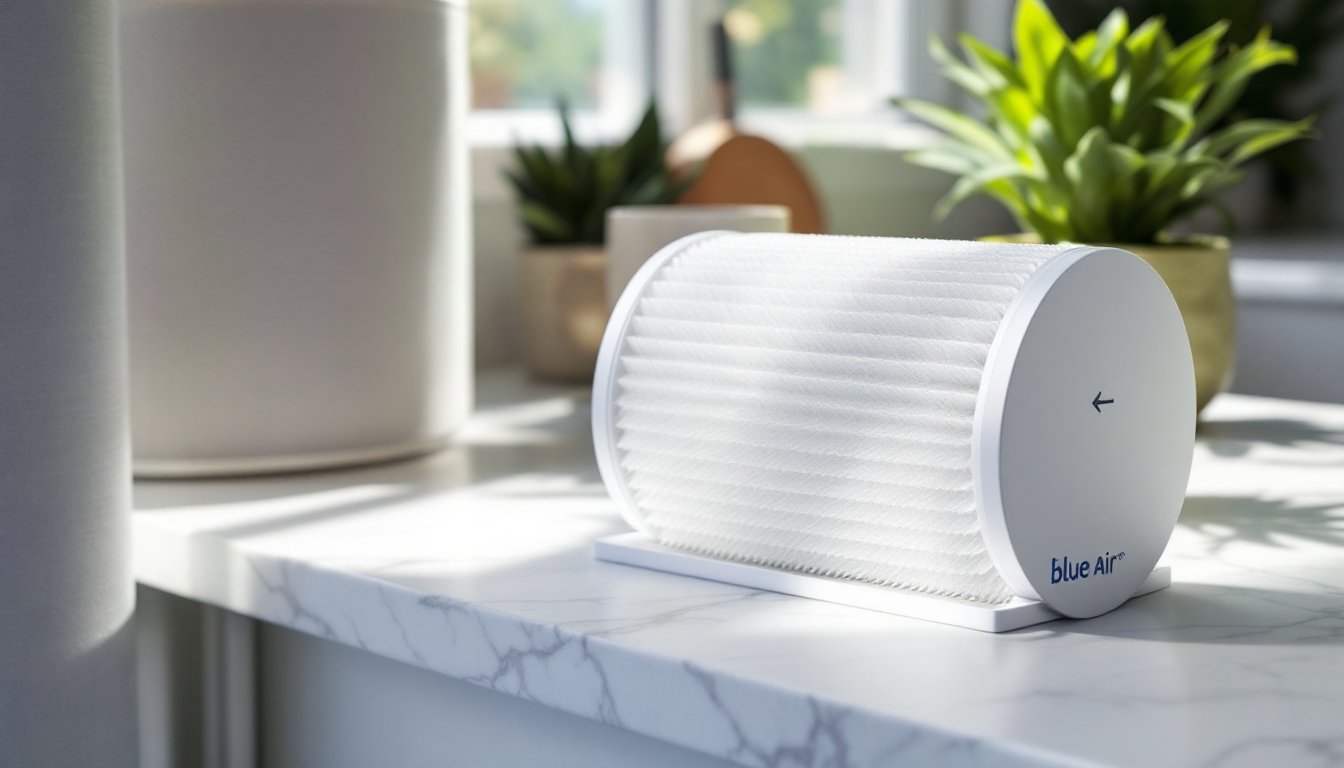
Most Blue Air models use a pleated polypropylene filter media wrapped around a cylindrical or flat frame, depending on the series. The 200/300 series typically use cylinder filters, while the Classic series uses flat panels. The filter material itself is bonded with an ion-charged layer that attracts dust, pollen, pet dander, mold spores, and smoke particles.
One key difference: Blue Air filters are single-stage and disposable. There’s no washable pre-filter or carbon layer you can clean and reuse. When the filter is spent, it’s done. This simplifies maintenance but means you need to budget for replacements. Carbon variants are available for models where odor control is a priority, these add a thin activated carbon layer between the pleats to adsorb VOCs and cooking smells.
How Often Should You Replace Your Blue Air Purifier Filter?
Blue Air recommends replacement every six months under typical residential use, but that’s a baseline, not a rule. Filter life depends on runtime, air quality, and the size of the space. If the unit runs 24/7 in a home with pets, smokers, or located near high-traffic roads, expect to replace filters closer to the four- or five-month mark.
Most Blue Air units include a filter indicator light that calculates runtime and triggers a warning. It’s based on hours of operation, not actual filter condition, so it’s somewhat arbitrary. If you run the purifier only during allergy season or a few hours a day, you might stretch filter life to eight or nine months. Conversely, heavy use in a dusty environment can clog the filter faster than the timer suggests.
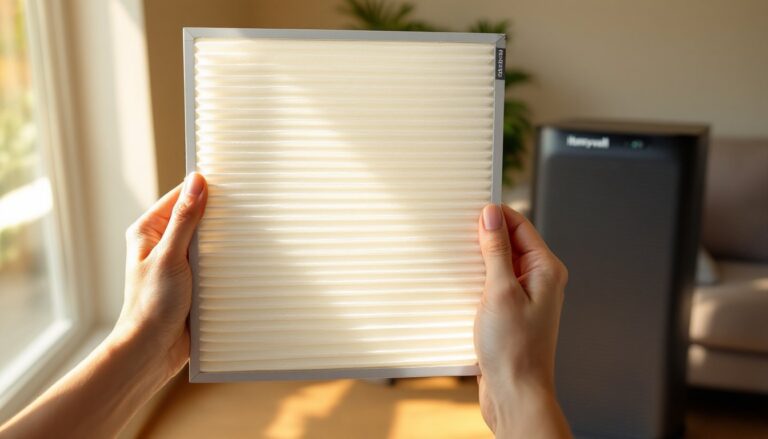
Visual inspection is your best gauge. Pull the filter and hold it up to a light source. If you can’t see light passing through the pleats or the surface looks matted with visible dust and debris, it’s time. A clogged filter reduces airflow, forces the motor to work harder, and increases energy consumption. According to testing from Digital Trends, degraded filters can reduce purifier efficiency by up to 50%, turning your unit into an expensive fan.
For homes in wildfire-prone regions or areas with seasonal pollen spikes, keeping a spare filter on hand is smart. You don’t want to wait two weeks for shipping when air quality nosedives.
Step-by-Step Guide to Replacing Your Blue Air Filter
Replacing a Blue Air filter takes about two minutes. No tools required, no screws to strip. Here’s the process:
-
Turn off and unplug the unit. Don’t skip this. Even though there’s no high voltage exposure, it’s basic electrical safety and prevents the fan from spinning up while your hand is inside.
-
Remove the outer shell or door. For Classic series models (400/600), the front panel lifts off after pressing release tabs at the bottom. For the 200/300 series, the entire fabric pre-filter sleeve slides off the unit. The 411 and smaller models have a back panel that twists off counterclockwise.
-
Pull out the old filter. Cylinder filters slide straight out. Flat filters lift up and out of their tracks. There’s no locking mechanism, just friction fit. If the filter seems stuck, it’s likely due to dust buildup creating suction. A gentle wiggle breaks it free.
-
Dispose of the old filter properly. Seal it in a plastic bag before tossing it in the trash. The filter media contains all the particulates it’s captured over months, mold spores, allergens, and fine dust. You don’t want that redistributed into your home during disposal.
-
Unwrap and insert the new filter. Blue Air ships filters in plastic sleeves. Remove all packaging, including any protective films or cardboard inserts. Slide or press the new filter into place, matching the orientation of the old one. There’s usually an airflow direction arrow printed on the filter frame, make sure it points toward the fan motor.
-
Reinstall the cover and reset the filter timer. Most models require a manual reset. On the Classic series, hold the filter indicator button for 5-10 seconds until the light turns off. On app-connected models like the Blue Pure or HealthProtect series, reset via the Blue Air app.
Common mistake: Reinstalling the fabric pre-filter inside out. The coarser side should face outward. If you notice reduced airflow immediately after replacement, double-check orientation.
Choosing the Right Replacement Filter for Your Blue Air Model
Blue Air filters are model-specific. A filter for a Blue Pure 411 won’t fit a Classic 480i, and trying to force it will damage the housing. Always verify your model number before ordering. It’s printed on a label on the back or bottom of the unit.
Common Blue Air models and their filters:
- Blue Pure 411 / 411+: Uses a Particle + Carbon filter (small cylinder, ~5 inches tall). Designed for rooms up to 161 square feet.
- Blue Pure 211 / 211+: Uses a larger 3-stage filter (fabric pre-filter, particle filter, carbon filter). Covers up to 540 square feet.
- Classic 480i / 405 / 605: Uses flat panel SmokeStop or Particle filters. SmokeStop adds extra activated carbon for odor control. Room coverage ranges from 400 to 775 square feet depending on model.
- HealthProtect 7400 series: Uses HEPASilent Ultra filters with an added antimicrobial layer. These are the most expensive in the lineup but rated for larger spaces and higher CADR (Clean Air Delivery Rate).
Blue Air offers Particle filters (standard) and SmokeStop filters (carbon-enhanced). If you’re dealing with cooking odors, smoke, or VOCs from new furniture or paint, the SmokeStop variant is worth the extra cost. For general dust and allergen control, the standard Particle filter does the job.
Some third-party sellers claim “compatible” or “generic” filters. These are hit-or-miss. The filter media might be thinner, the pleating inconsistent, or the fit sloppy. A poorly fitting filter allows bypass airflow, unfiltered air slipping around the edges. Reviews from CNET consistently show that aftermarket filters underperform in particle capture tests, sometimes by as much as 30%.
Where to Buy Genuine Blue Air Filters and What to Avoid
Authorized sources for genuine Blue Air filters include:
- Blue Air’s official website: Often the most expensive, but runs periodic sales and offers subscription discounts (usually 10-15% off with auto-delivery).
- Amazon (sold by Blue Air or authorized retailers): Check the seller. If it’s not Blue Air or a known retailer like Best Buy or Lowe’s, verify authenticity. Look for “Ships from and sold by Amazon.com” or the official Blue Air storefront.
- Big-box home improvement stores: Lowe’s and Home Depot carry a limited selection in-store, primarily for the Blue Pure 211 and Classic 480i. Selection is better online.
- Specialty appliance retailers: Bed Bath & Beyond, Target, and similar chains stock some models but often at full MSRP.
Red flags for counterfeit or substandard filters:
- Prices significantly below MSRP (if a $70 filter is listed for $25, it’s not genuine).
- Generic packaging with no Blue Air branding or model-specific labeling.
- Sellers based overseas with long shipping times (common on eBay or marketplace listings).
- Filters described as “compatible with” rather than “genuine Blue Air.”
Counterfeit filters are more common for popular models like the 211+. They’ll physically fit, but the filter media is usually lower density, the carbon layer minimal or absent, and the electrostatic treatment inconsistent. Independent testing from Tom’s Guide found that knockoff filters failed to meet stated particle capture rates, sometimes capturing less than 80% of fine particulates compared to 99%+ for genuine filters.
Subscription services through Blue Air’s site or Amazon can save money long-term and ensure you never forget a replacement, but lock you into a delivery schedule. If your usage varies, it might not be the best fit.
Maximizing Filter Life: Maintenance Tips for Homeowners
While you can’t extend a Blue Air filter indefinitely, a few practices can push replacement intervals toward the longer end of the range and keep the unit running efficiently.
Pre-filter fabric maintenance: Models with washable fabric pre-filters (Blue Pure 211/211+) should have that sleeve washed every month or so. Toss it in the washing machine on cold, no detergent, air dry. This outer layer catches larger particles, pet hair, lint, dust bunnies, before they reach the main filter. Keeping it clean reduces load on the internal filter.
Vacuum the intake area: Dust and debris on the exterior grilles restrict airflow. Once a month, use a brush attachment on your vacuum to clean the intake and exhaust vents. This takes 30 seconds and prevents the motor from overworking.
Run the purifier strategically: If indoor air quality is generally good, there’s no need to run the unit on high 24/7. Use lower fan speeds during the day and ramp up during cooking, cleaning, or when windows are open. Lower speeds move less air through the filter, reducing particulate load.
Control source pollutants: Air purifiers aren’t a substitute for fixing the underlying issue. If you’ve got a moisture problem causing mold, a purifier will capture spores but won’t stop growth. Address leaks, improve ventilation, and reduce indoor humidity to below 50% relative humidity. For homes with smokers, designated outdoor smoking areas dramatically reduce filter fouling.
Monitor the filter indicator, but don’t rely on it blindly. If the light says replace but the filter looks clean and airflow is strong, you might get another month. Conversely, if airflow drops noticeably before the light triggers, don’t wait.
Keep spares on hand. Filters don’t degrade in storage if kept sealed and dry. Buying a two-pack during a sale and storing one in a closet ensures you’re not stuck paying full price or breathing dirty air while waiting for shipping.
Conclusion
Blue Air filters are straightforward to replace, but getting the right one and knowing when to swap it makes the difference between a purifier that works and one that’s just moving air. Stick with genuine filters, pay attention to actual filter condition rather than just the timer, and keep up with basic maintenance. Your lungs, and your energy bill, will thank you.