
Table of Contents
ToggleFinding the right table for a small kitchen isn’t just about saving floor space, it’s about creating a functional eating area that doesn’t compromise comfort or style. A two-person kitchen table solves a common problem: how to fit a proper dining spot into apartments, condos, breakfast nooks, or galley kitchens without blocking traffic flow or making the room feel cramped. Whether outfitting a first apartment or downsizing from a larger home, the right compact table transforms an awkward corner into a daily gathering spot. This guide covers everything needed to select, size, and position a small kitchen table that works.
Key Takeaways
- A small kitchen table for 2 typically measures 24-36 inches in diameter and fits into tight spaces while maintaining the 30-36 inches of recommended walkway clearance.
- Drop-leaf and pedestal bistro tables are ideal for compact kitchens because they save floor space and are easier to move or reposition than larger furniture.
- Round or square tables work better in tight quarters than rectangular designs since they improve traffic flow and eliminate sharp corners that take up visual space.
- Material selection should match your kitchen décor and lifestyle: wood suits traditional spaces, metal works for modern kitchens, and glass makes small kitchens feel more open and airy.
- Strategic placement in corners, galley ends, or near windows maximizes your layout, and using painter’s tape to outline the footprint before purchasing ensures the table won’t block appliance access or impede traffic flow.
Why a Two-Person Kitchen Table Is the Smart Choice for Compact Spaces
A table sized specifically for two people typically measures 24 to 36 inches in diameter or width, significantly smaller than a standard four-person dining table that starts at 36 inches square. This footprint difference matters in kitchens where every square foot counts.
Two-person tables fit naturally into awkward spaces that larger furniture can’t occupy: the dead zone beside a refrigerator, a narrow galley end, or a corner near a window. They allow for proper clearance around the table, the 30 to 36 inches of walkway space recommended by most interior design standards, without forcing sideways shuffling past chairs.
From a practical standpoint, smaller tables are easier to move during cleaning, lighter to carry up apartment stairs, and simpler to reposition when rearranging a kitchen layout. They also cost less in most cases, both for the table itself and any chairs purchased separately.
For couples, roommates, or solo dwellers who occasionally host one guest, a two-person table handles daily use without the visual and physical bulk of furniture designed for larger households. It’s right-sized, not downsized.
Types of Small Kitchen Tables Perfect for Two People
Drop-Leaf and Folding Tables
Drop-leaf tables feature hinged leaves on one or both sides that fold down when not in use, reducing the table’s footprint by roughly half. A typical drop-leaf for two measures around 30 inches wide with both leaves up and 10 to 12 inches with them down. This type works well in kitchens that need a table only during meals, the rest of the time, it can sit flush against a wall or tuck into a corner.
Look for tables with gate-leg or swing-leg supports that lock securely when the leaves are raised. Cheaper models use simple hinges without proper support, leading to sagging or instability when weight is applied to the extended surface.
Folding tables collapse completely for storage in a closet or against a wall. Most folding designs sacrifice sturdiness for portability, but newer models with locking mechanisms and reinforced frames handle daily use better than old card tables. Check the leg bracing, cross-bracing or double-tube legs provide much better stability than single-point hinges.
Drop-leaf and folding options suit renters or anyone who needs flexible furniture. They’re also useful in kitchens that double as workspaces, where the table serves multiple functions throughout the day.
Bistro and Pub-Style Tables
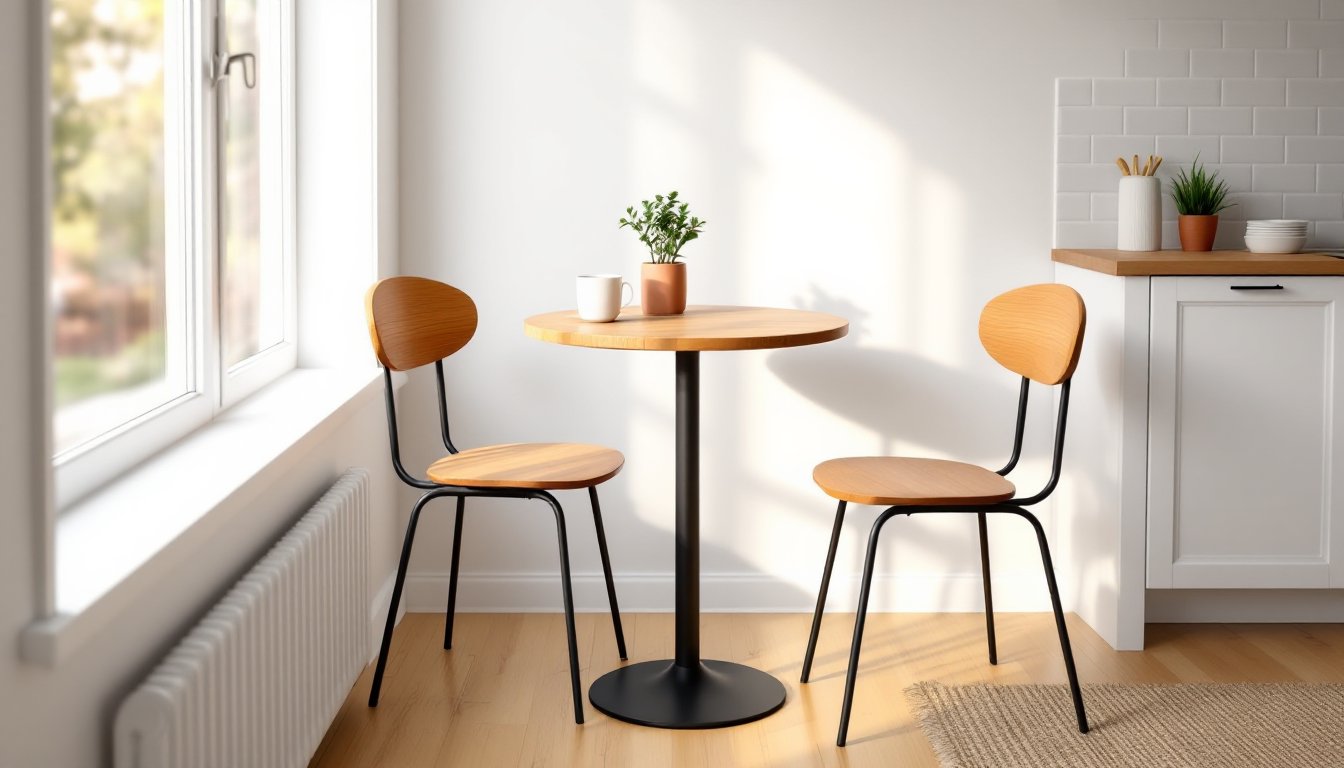
Bistro tables, round or square tops on a single central pedestal, typically measure 24 to 30 inches across. The single-base design eliminates corner legs, making it easier to fit two chairs without leg interference. Pedestal bases also simplify floor cleaning since there are no four-legged obstacles.
Most bistro tables sit at standard dining height (28 to 30 inches), but some are designed for counter height (36 inches) or bar height (40 to 42 inches). Counter-height versions pair with taller stools and can create visual separation in open-plan spaces, plus they often tuck under kitchen islands when not in use.
Pub-style tables share the elevated height but usually have a slightly larger top, 30 to 36 inches, and may include a footrest ring around the base. The taller stance works well in kitchens with high ceilings or when matching the table height to existing counter or bar seating.
Both styles come in materials ranging from wood and metal to laminate and glass. Metal bases (steel or cast iron) offer the best stability for top-heavy designs, while wooden pedestals should have a wide, weighted base to prevent tipping.
Key Dimensions and Size Considerations for Your Space
Start by measuring the available floor space, then subtract clearance. A functional eating area needs 30 inches minimum from the table edge to any wall, cabinet, or appliance to allow a person to sit and stand comfortably. If the area serves as a walkway, common in galley kitchens, increase that to 36 to 42 inches to avoid constant chair-shifting.
For square tables, a 30-inch top seats two people with adequate elbow room (about 24 inches per person along one edge). A 36-inch square provides more comfort but starts to encroach on compact-space efficiency.
Round tables are more forgiving in tight spaces since there are no sharp corners. A 30-inch diameter round table fits two people easily and can squeeze in a third in a pinch. Round tops also improve traffic flow in kitchens where people move around the table from multiple angles.
Rectangular tables sized for two typically measure 24 inches wide by 30 to 36 inches long. The narrow width is key, anything over 30 inches wide starts to feel oversized for a two-person setup unless the kitchen has generous square footage.
Don’t forget chair dimensions. Most dining chairs are 16 to 18 inches wide and need to slide under the table apron when not in use. Measure the distance from the floor to the underside of the table’s apron (usually 24 to 27 inches for standard tables) and ensure chairs fit with at least 2 inches of clearance. Armless chairs or stools work better in very tight quarters.
Material and Style Options to Match Your Kitchen Decor
Solid wood (oak, maple, walnut) offers durability and a traditional look that suits farmhouse, Scandinavian, or craftsman-style kitchens. Hardwood resists scratches and dents better than softer woods like pine, but it’s also heavier and more expensive. Expect to refinish or reseal wood tops every few years, especially if the table sees daily use.
Laminate or veneer over particleboard or MDF provides a wood appearance at a lower cost and lighter weight. Modern laminates resist stains and heat better than older versions, but edges can chip if bumped hard. This material works for renters or anyone planning to upgrade furniture in a few years.
Metal tables, usually steel or aluminum with a powder-coated finish, fit industrial, modern, or minimalist kitchens. Metal is easy to clean, extremely durable, and often lighter than wood, making it simple to move. Check for plastic or felt foot pads to prevent floor scratching.
Glass tops (tempered glass over a metal or wood base) create an open, airy feel that helps small kitchens appear larger. Tempered glass is required for safety, it crumbles into small, blunt pieces rather than sharp shards if broken. Glass shows fingerprints and requires frequent cleaning, but it pairs well with contemporary or transitional decor.
Many compact designs offered by small space furniture makers combine materials, wood tops with metal legs, for instance, to balance warmth and industrial edge. Match the table material to existing finishes: if the kitchen has stainless appliances and white cabinets, a glass or metal table reinforces that clean look. Warmer kitchens with wood cabinetry or butcher-block counters call for wood or wood-look tables.
Consider maintenance requirements. Glossy finishes show scratches: matte or distressed finishes hide wear better. If kids or pets will be around, skip glass and light-colored wood.
Smart Placement Tips for Maximizing Your Kitchen Layout
Corner placement is the most common solution for small kitchens. A round or square table nestled into a corner uses dead space and keeps the center of the room open. Add a bench along one wall to save even more floor space, benches tuck completely under the table and can seat two people side by side if needed.
In galley kitchens, position the table at one end of the run, perpendicular to the counters. This keeps the primary work aisle clear while still providing a dedicated eating spot. If the galley is particularly narrow (less than 8 feet wide), consider a wall-mounted drop-leaf table that deploys only at mealtime.
For eat-in kitchens with a defined nook or alcove, center the table in the space and ensure windows or light sources aren’t blocked. Natural light improves the dining experience and makes the area feel less cramped. Placing the table near a window also creates a pleasant view during meals, which many compact living enthusiasts prioritize in small spaces.
Island-adjacent placement works if the kitchen island has a seating overhang on one side but the homeowner wants a separate, more formal table nearby. Position the table 48 to 60 inches away from the island to allow simultaneous use without crowding.
Avoid placing tables directly in front of the refrigerator, oven, or sink, the kitchen’s primary work triangle. These appliances need unobstructed access, and a table blocking the path becomes a daily frustration.
If the kitchen opens to a living or dining area, use the table as a visual divider to define zones without walls. A pub-height table with stools creates separation while maintaining sightlines, which helps small apartments feel more open.
Test the layout before committing. Use painter’s tape on the floor to mark the table’s footprint and chair placement, then walk through typical kitchen tasks, opening the dishwasher, accessing cabinets, moving between appliances. The setup should enhance flow, not impede it. Adjustments are easier with tape than after hauling furniture into place.