
Table of Contents
ToggleWhen a Bosch dishwasher flashes an error code mid-cycle, it’s not just being dramatic, it’s telling you exactly what’s wrong. These alphanumeric messages are diagnostic shortcuts built into the machine’s control board, designed to help homeowners pinpoint issues without guessing. Unlike older appliances that simply quit working, modern Bosch dishwashers communicate problems ranging from clogged filters to faulty drain pumps. Understanding these codes can save both time and money, turning what feels like a catastrophe into a manageable repair. Most errors don’t require a service call: they need attention to basic maintenance or a simple reset.
Key Takeaways
- Bosch dishwasher error codes are diagnostic messages that pinpoint specific problems—from water leaks to drain issues—allowing homeowners to troubleshoot without costly service calls.
- The three most common Bosch dishwasher error codes are E15 (water in base pan), E24 (drain pump issues), and E22 (filter blockage), all of which can often be fixed with basic maintenance and simple tools.
- Most DIY repairs involve checking hoses for kinks, cleaning filters every 1–2 weeks, and draining pooled water from the base pan by tilting the unit backward.
- Call a professional technician if you encounter electrical error codes like E01, E09, or E17, or if your dishwasher is still under warranty to avoid voiding coverage.
- Always write down the error code before attempting repairs, consult your owner’s manual for model-specific guidance, and reset the machine by powering it off for 60 seconds if the code clears.
How to Read and Interpret Bosch Dishwasher Error Codes
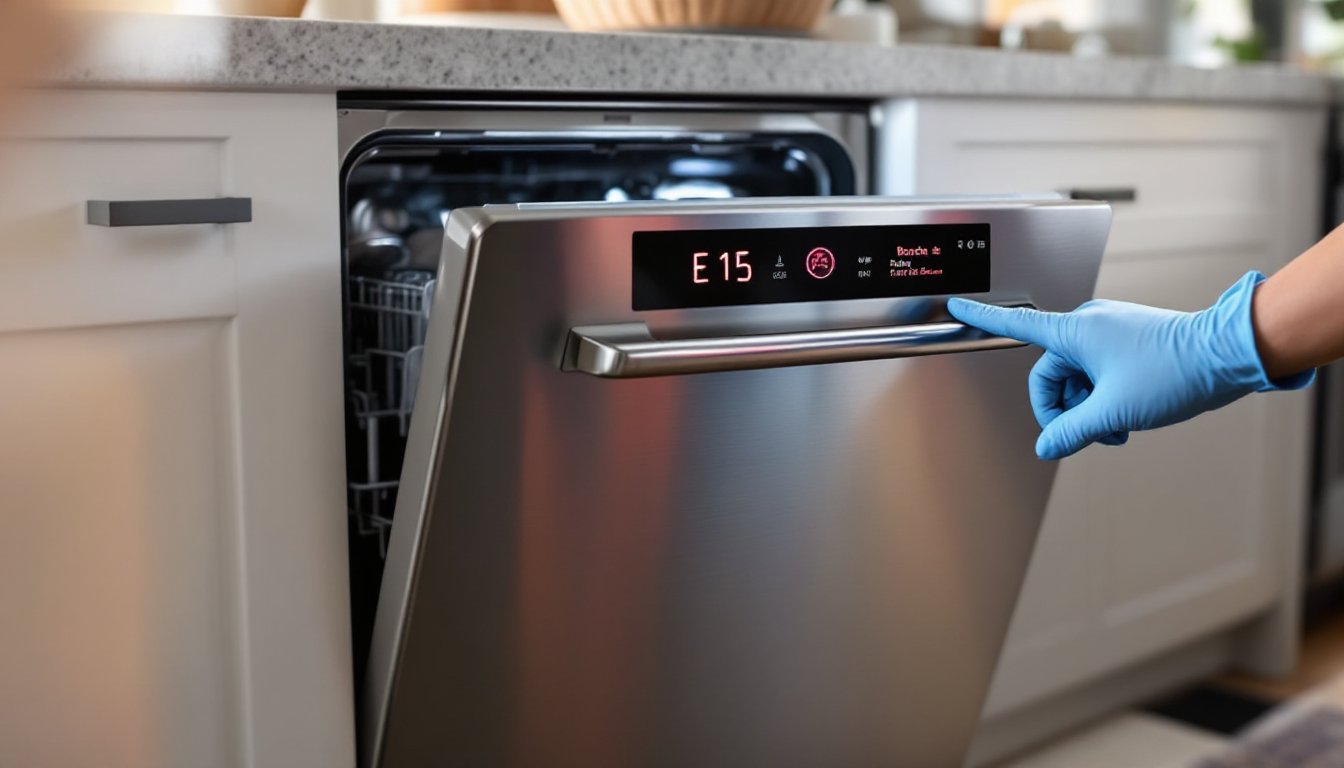
Bosch dishwasher error codes appear on the front display panel as a combination of a letter and one or two numbers, like E15, E24, or E22. On models without a digital display, the codes show as a series of blinking lights on the control panel. The pattern matters: count the blinks in each sequence to decode the message.
To access the error code on most Bosch models, press and hold the Start button for about three to five seconds. The display will cycle through any active fault codes stored in memory. If the dishwasher won’t power on at all, check the circuit breaker first, tripped breakers are more common than people think, especially on shared kitchen circuits.
Once the code displays, write it down before attempting any fixes. Some codes clear automatically after the underlying issue resolves, while others require a manual reset. To reset the machine, turn off the dishwasher, wait 60 seconds, then power it back on. If the code returns immediately, the problem still exists and needs hands-on troubleshooting.
Always consult the owner’s manual for model-specific code definitions. Bosch uses consistent codes across most product lines, but variations exist between older and newer models. The manual also identifies which repairs void warranties, critical info if the unit is still covered.
Most Common Bosch Dishwasher Error Codes and What They Mean
E15 Error Code: Water in the Base Pan
The E15 error indicates water has pooled in the base pan beneath the dishwasher tub, triggering the anti-flood safety switch. This is Bosch’s most frequent error code and often the most alarming because the machine won’t run until it’s fixed.
Causes range from a cracked hose, leaking door gasket, or overfilled detergent dispenser creating excessive suds. Sometimes, it’s just residual water from a previous leak that never fully evaporated. The base pan doesn’t drain on its own, it needs manual removal.
To address it, tilt the dishwasher backward about 30 to 45 degrees (you’ll need a helper for this). Prop the front up on wood blocks and let gravity drain the water out the back. Alternatively, pull the unit out from the cabinetry and tip it on its side over towels. Once empty, inspect all hoses, connections, and the door seal for damage. If everything looks intact, the issue was likely a one-time overfill.
E24 Error Code: Drain Pump Issues
The E24 error signals a drainage problem, water isn’t leaving the tub as it should. This code points to either a clogged drain hose, a kinked line, or a failing drain pump. Homeowners equipped with appliance troubleshooting skills can often resolve this without professional help.
Start by checking the drain hose connection under the sink. The hose should loop up higher than the sink drain connection to prevent backflow, following a high-loop or air-gap configuration per the International Residential Code (IRC) plumbing guidelines. If the hose sags below the connection point, wastewater can siphon back into the dishwasher.
Next, disconnect the hose and inspect for kinks or blockages. Food particles, grease buildup, and even small bones can lodge in the line. Run water through the hose from a faucet to confirm flow. If the hose is clear, the drain pump itself may be jammed or burnt out. Access the pump by removing the bottom kickplate and checking for debris around the impeller. Replacing a drain pump is straightforward but requires basic hand tools and costs around $80 to $150 for the part, depending on the model.
E22 Error Code: Filter Blockage Problems
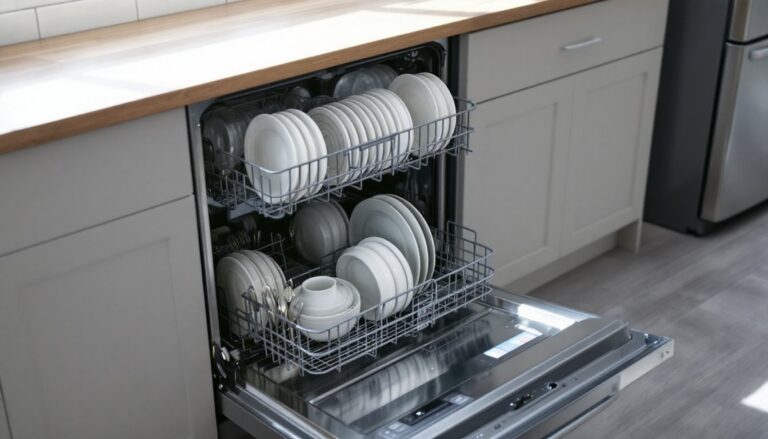
The E22 error means the dishwasher’s filter system is clogged, restricting water flow to the spray arms. Bosch dishwashers use a multi-stage filter assembly at the tub bottom, a coarse screen catches large debris, while a fine mesh filter traps smaller particles.
Remove the bottom dish rack and locate the cylindrical filter assembly. Twist counterclockwise to unlock and lift it out. Rinse both the coarse and fine filters under hot running water, using a soft brush to dislodge stuck-on food and grease. Avoid harsh scrubbing that could damage the mesh. Proper kitchen appliance maintenance includes cleaning these filters every one to two weeks, depending on use.
If the filter looks clean but the code persists, check the sump area beneath the filter. Small items like toothpicks, glass shards, or twist ties can obstruct the pump intake. Also inspect the spray arm nozzles, calcium buildup can block water jets, which the control board sometimes interprets as a filtration issue. Soak spray arms in white vinegar to dissolve mineral deposits, then rinse thoroughly before reinstalling.
Step-by-Step Fixes for Bosch Dishwasher Error Codes
Safety first: Before any repair work, disconnect power at the circuit breaker and shut off the water supply valve under the sink. Wear nitrile gloves and safety glasses, especially when handling dirty filter components or working near sharp metal edges inside the tub.
For E15 (water in base pan):
- Turn off power and water supply.
- Remove the bottom dish rack and check for visible leaks inside the tub.
- Tilt the dishwasher backward 30–45 degrees with a helper, or pull it out and lay it on its side over towels.
- Let water drain from the base pan for 10–15 minutes.
- Inspect all hoses, the door gasket, and the detergent dispenser for damage or wear.
- Return the unit upright, restore power, and run a test cycle.
For E24 (drain pump issues):
- Disconnect power and pull the dishwasher forward to access the rear drain hose.
- Check that the drain hose loops up to the underside of the countertop before descending to the sink drain or garbage disposal.
- Disconnect the hose and flush it with water to clear blockages.
- Remove the kickplate and inspect the drain pump impeller for debris.
- If the pump motor hums but doesn’t spin, replace the pump assembly (consult model-specific instructions).
- Reconnect everything, restore power, and run a rinse cycle to test.
For E22 (filter blockage):
- Power off the unit and remove the bottom rack.
- Twist and lift out the filter assembly.
- Rinse filters under hot water, scrubbing gently with a soft brush.
- Check the sump area below the filter for foreign objects.
- Remove and soak spray arms in white vinegar if you see mineral buildup.
- Reassemble all components, restore power, and run a short cycle.
If error codes persist after these fixes, the control board may need reprogramming or replacement, a job that typically requires a technician with diagnostic software.
When to Call a Professional vs. DIY Repair
Most Bosch error codes, E15, E22, E24, and E25 (similar to E24), fall within DIY capability for homeowners comfortable with basic plumbing and disassembly. These repairs require hand tools like screwdrivers, pliers, and a flashlight, but no specialized equipment.
Call a professional if you encounter E01 (control board failure), E09 (heating element fault), or E17 (water fill issues tied to the inlet valve). These codes involve electrical components and water valves that, if improperly handled, can cause water damage or electrical hazards. Licensed appliance techs carry multimeters and diagnostic software to test voltage and resistance at component terminals, tools most DIYers don’t own.
Also bring in a pro if the dishwasher is under warranty. Opening certain panels or replacing parts yourself can void coverage, turning a free repair into an expensive lesson. Many manufacturers require authorized service providers to honor warranty claims, so confirm your status before cracking open the case.
Structural issues, like a cracked tub or damaged door latch assembly, also warrant professional help. These repairs involve ordering OEM parts and precise reassembly to maintain the unit’s watertight seal, critical for preventing future E15 errors.
Finally, if you’ve cleared the error codes but the dishwasher still underperforms, dishes come out dirty, cycles take twice as long, or strange noises persist, it’s time for a diagnostic service call. Intermittent electrical faults and worn mechanical parts don’t always trigger codes but still compromise performance. Expect diagnostic fees to run $75 to $150, often credited toward repair costs if you proceed with the work.